Press Enter / Return to begin your search.

Everything You Think You Know About Interruptions Is Wrong

What do you think happens to your productivity when your boss butts in to ask you questions, or when a coworker needs a file? Many people assume interruptions slow them down and hurt the quality of their work. But research shows it’s just not true.

Little interruptions actually cause people to work faster. More importantly, the quality of their work remains uncompromised.

Interruptions Speed Up Work

In two companion studies, workers in a simulated office environment were asked to edit text while they were interrupted at different rates by researchers. The subjects didn’t know that the interruptions were a part of the study, so the researchers made the interruptions seem relevant to the task. Much to the researchers’ surprise, subjects who were interrupted completed their work faster than a control group, and their finished products were just as good. The fact that the text editing was chosen as the task is significant, because it reflects real-world work that requires concentration to do well.

The researchers believe that when workers are aware of interruptions that could potentially slow them down, they develop strategies to compensate or even overcompensate.

A different group of researchers had a hunch that if interruptions were unrelated to the task at hand, the outcomes might be different. But they were wrong.

In their experiment, subjects had to reply to emails with information that they could look up in a documents that they were provided. Like text editing, answering emails is a representative office task that requires focus. One group faced interruptions that were related to the task at hand, while another group faced completely irrelevant interruptions. A third control group carried out the same assignment without any interruptions. The two groups that were interrupted finished their work faster than the control group, regardless of the nature of the interruptions. The control subjects took on average two minutes longer to complete a roughly 20-minute assignment.

Quality Of Work Remains High

The research team also wondered whether the emails from the interrupted groups might have gotten snippy or sloppy, assuming that people become frustrated and reckless when they’re constantly interrupted while trying to work. Nope! Just as with the text-editing study, the quality of the work remained high. Typos, length of email, and politeness were steady across all three groups.

What’s happening? Why do interruptions cause people to work faster while maintaining the same quality of work?

External Versus Self Interruptions

Studies about a different kind of interruption—self interruptions—might be key to figuring it out. Researchers largely classify interruptions as either being caused by something outside of ourselves (external interruptions) or something within (self interruptions). When people task-switch, for example, without being prompted by an on-screen notification or other external force, that’s a self-interruption.

Sometimes we self-interrupt to take care of things that we remember we need to do. If you’re in the thick of working and suddenly remember you never picked up some long-forgotten dry cleaning, you might stop what you’re doing to write it down or send a text message to another person who can pick it up for you. Once that urgent matter is off your mind, you can go back to what you were doing, perhaps with one small weight lifted off your shoulders.

But it’s also possible, according to some researchers, that the bigger reason we self-interrupt is to self-regulate. In other words, we may be taking short mental breaks from our work because they help us stay on task for longer.

Whether interruptions come from our environment or from our own brains, it seems clear that they do help us stay productive. But external interruptions do have a cost: They seem to increase stress, frustration, effort, and other pressures.

A little extra stress and frustration might not cause a dip in productivity or quality today—to the contrary, they probably will help light a little fire under you to get your job done—but they could take their toll over time. So while interruptions do seem to give us a little immediate productivity boost, we should be aware of their potential harm in the long term.

Jill Duffy is a writer covering technology and productivity. She is the author of Get Organized: How to Clean Up Your Messy Digital Life.

Read More

When Your Dream School Accepts You (But Only Online)

This spring, Caleb Kinsella was one of the thousands of high school seniors around the country anxiously waiting to find out if he got into the college he wanted. At 6 p.m. one day, his top school, the University of Florida (UF), would update its website with every applicant’s acceptance status all at once. UF is a great school, in the top 50 in the country according to U.S. News and World Report, and Kinsella (who, full disclosure, is my nephew) wasn’t sure he would make the cut with his just-okay grades and test scores. So he was thrilled and a little surprised when he found out that he’d gotten in. Except, the more he looked, the more it seemed like something wasn’t quite right.

“It kind of fooled me at first,” Kinsella told me. “It said, ‘Congratulations, you’ve been admitted to the University of Florida.’ But shortly after, I discovered it was actually the ‘Path to Campus Enrollment.’ Is that what it’s called? The PaCE program.”

Kinsella had been accepted to a year-old program at UF that lets students who don’t quite make the cut for traditional admission take their first two years of classes online or at a community college for a 25% discount in tuition. They can start taking classes on UF’s campus only after they earn 60 credits, and start as juniors. This combination of online and offline education is new, but gaining in popularity. Many institutions around the country, including the University of Colorado and , offer so-called hybrid degrees for bachelor’s or master’s students in many fields of study.

This is all part of an expansion in online education that’s been progressing fitfully for most of this decade, an experiment involving millions of young people whose results are far from certain. While U.S. News and World Report ranks more than 200 online bachelor’s programs, fewer than half of them report their graduation rates. Of the 69 programs that did, only 16 graduate more than half of their students. And those who did manage to complete their courses took a long time: Only 35% of programs had students who graduated within six years.


Online education began to capture the educational world’s imagination in a serious way in 2012, which the New York Times called “the year of the MOOC,” or massive open online class. Startups like Coursera, Udacity, and EdX promised to permanently change the way young people learned. In a TED talk from that year, Coursera cofounder Daphne Koller spoke about MOOC’s ability to solve problems as diverse as the legacy of apartheid in South Africa and the burden of student debt in America. Coursera’s goal, she said, was “to take the best courses from the best universities, and provide them to everyone around the world, for free.”

<!– VIDEO FILTER – INVALID CODEC IN: <!– VIDEO FILTER – INVALID CODEC IN: [video]https://www.ted.com/talks/daphne_koller_what_we_re_learning_from_online_education?language=en[/video] –> –>

Ben Maddox, New York University’s chief instructional technology officer and one of its primary online education pioneers, calls this time “MOOC fever.” It was “a time of heightened awareness and expectations,” he told me, which “caused us to think about instruction in new and different ways. It was energizing.”

One of the earliest MOOC providers was Udacity, founded by former Google VP and professor Sebastian Thrun. He started the company in early 2012 after being involved in an online education pilot program at Stanford. “MOOCs didn’t come about because of years of careful planning,” he told Fast Company. “They came about because I put my Stanford classes online, and I had no idea what would ensue.”

But just a year later, it was clear that MOOCs were far from changing the world. A study by the University of Pennsylvania found that student engagement with courses fell drastically after the first week, and that completion rates averaged just 4%. By the end of that year, Thrun was giving interviews to outlets including Fast Company, saying Udacity had “a lousy product.” He pivoted his company’s focus from changing the world to helping people in life-change careers.

MOOCs are of course separate from the online classes offered by a university (for one thing, university classes aren’t free). But the volume of attention MOOCs generated made traditional educational institutions interested in offering online classes, as well, whatever the problems might be; many universities continued to design and expand their own online programs, even as enthusiasm for MOOCs waned. According to a 2016 report from the U.S. Department of Education, 5.5 million American students, or 25% of all college students, were taking some online classes. That was in 2013, and the number has continued to grow, if slowly.

There are several reasons that online classes are particularly attractive to today’s colleges. For one, they have the potential to drastically increase revenue to institutions facing lower traditional enrollment. College enrollments fell by almost a million students between 2011 and 2013, the largest two-year drop since the U.S. Census Bureau began to collect these statistics in 1966.

With an online course, a professor can design a curriculum once, and her university can run it again and again, with minimal updates, into the far future. The number of students isn’t limited to those who can physically move to your campus and attend classes, or dependent on the availability of a professor who’d maybe rather be writing a book. Anyone, anywhere, can take classes at any time.

NYU’s Maddox disputes that online classes are a revenue generator for schools. “It’s like cloud computing,” he said. “It has all sorts of advantages, but the decision to go to cloud isn’t a lot of cost savings in the end.” It’s the same with online education, he says. “To promote a high-quality, adaptive educational experience? We’re still seeing if that’s a cost savings in the end.”

In the best cases, universities have been learning lessons from MOOCs’ failures as they design their courses.

For one, online classes tend to do best when students are a bit older and pursuing a specific educational goal. At the new Udacity, Thrun told me, the typical student is now 24 to 50 years old and looking to gain skills to help in their lives and careers.

“They rarely come to us and say, ‘I want to learn something interesting,'” he explains. “This attitude increases their chances of success, because there’s something tangible they want from us. It’s not just self-enlightenment. That motivation is important.” NYU also focuses its online offerings around graduate programs in areas that lend themselves to concrete truths and remote evaluation of progress, like computer science and engineering.

Education providers are also realizing that online classes are especially attractive when they offer cost savings to the student. Not only is crushing student debt one of the primary reasons a student might second-guess college attendance, but a lower price tag matches the “less-than” perception of online classes. Recognizing this, Udacity now offers a complete master’s degree in computer science through a partnership with Georgia Tech and AT&T for only $7,000.

Many online programs are finding that students succeed best when they’re engaged with the content. “If you go to Stanford, and instead of teaching students and mentoring them, you just gave them all the books for all the classes, I think you’d see the same low completion rates” that many MOOCs have, Thrun told me. “To me, the MOOC is the book. The video book. It’s a component, but not all there is to it.”

Increasing engagement is also driving another Udacity project. Thrun said he is “actually experimenting with meetups,” and looking at “what happens if someone takes charge [in a class]. And it does positively impact the outcomes.” Students getting together to learn, in person, with “someone taking charge.” Interesting (and familiar!) idea.


So how do these trends look on the ground? At UF, officials tried to tick all these boxes with its online offerings, though it has faced several major problems. Elizabeth D. Capaldi Phillips was recruited from Arizona State University to run the new program, now dubbed UF Online (of which PaCE is a major part), only to resign after two months. Her position went unfilled for a year. The new head, Evangeline J. Tsibris Cummings, was appointed in July 2015, just months before PaCE admitted its first class of students. Meanwhile, the university cancelled its contract with Pearson to administer UF Online after it failed to attract out-of-state students who pay higher tuition.

That first class ended up being very small, despite its reduced price tag. PaCE accepted 3,000 students its first year, but had only 235 people agree to take part in its online experiment (for comparison, about 50% of students accepted to UF in a more traditional way choose to enroll). Part of this, perhaps, was a focus in the first year on the fact that students hadn’t gotten full campus enrollment, and not that they had gotten into PaCE.

“We got less than 10% of the students that we sent letters out to,” Cummings told Fast Company, “but frankly I think that is tremendous, considering it was brand new. There was some consternation in the initial launch where folks didn’t know what it was. I think there was some initial confusion about how it related to their on-campus admissions decision, and so we’ve learned from that.”

Paige Fry, a member of that class, remembers calling her mother in tears when she read her PaCE acceptance. “I didn’t know what it was or what it meant, and I was very upset,” she told me over the phone. However, after evaluating UF’s program, she thought their online journalism program was a good match for her.

Students of that first class were encouraged to move to Gainesville, where UF is located, she says, but were faced with a complex network of school activities in which they weren’t allowed to participate. They couldn’t use the school gym, but they could rush fraternities and sororities. They couldn’t live in the dorms, but could sit in the student section at football games. For two years, they are literally not allowed to officially participate in university classes.

This was because the university had decided that in order to make the program as low cost as possible, PaCE students were not required to pay university activity fees. The school has since reconsidered this position, and now allows PaCE students to pay additional fees and use all student services.

Fry eventually accepted, and took six classes her first semester, in which she got straight As. She also told me that many PaCE students semi-secretly sit in on the classes in which they’re officially enrolled online.

“In general, I’m a self-motivated person,” she told me. She works part-time, lives at home, and does her coursework whenever she wants. “I wake up at whatever time, and then sit down to do it,” she told me, describing a pretty enviable daily routine. However, it must be said, it’s a routine that’s not overly different from one I experienced in college and graduate school, which I attended in person.

Fry is obviously the kind of focused, goal-driven person who succeeds in online education. But what about someone with less focus? In other words, a typical college freshman, who may feel a little overwhelmed? And even more specifically, one who didn’t have the drive in high school to excel enough to receive a regular enrollment slot at a state school like UF?

“Honestly, if you asked me as a friend what recommendation I’d have about this, I’d have no recommendation at this point,” said Thrun. “I can see the general concern: Oh my god, maybe it’s not the right fit, he’s not going to be successful, he’s going to lose interest, and he’s going to give up on college forever. I understand that logic, and, boy, I wish I had a word of wisdom.”

In general, Thrun says, the education a student gets can vary widely from program to program, and even class to class. UF, for instance, is one of the few that reports graduation rates: 63% of online students graduated within four years, just slightly under its 67% rate among traditional students. This is likely among the reasons its online bachelor’s program comes in at number 11 in the nation in the rankings. But this doesn’t guarantee the success of the PaCE program.

So, is Kinsella, whose best friend was also accepted to PaCE, going to attend? How does he feel about being part of this experiment? “Excited, obviously,” he told me. “It felt great. It’s like, our favorite school.” He’s confident he can succeed. “I’m going to be there, and it’s going to be a lot of fun, but it just comes down to me, myself.”

Read More

How Jim McKelvey’s Launchcode Is Helping Unconventional Tech Talent

LaShana Lewis knew she could find a better job than managing a help desk. Growing up, Lewis had been intrigued by technical problems, and a high school teacher, recognizing her aptitude, had encouraged her to pursue a computer science major in college. Lewis managed to complete three and a half years of a degree before running out of scholarship funding, but on the job market, her coding skills seemed worthless. “It was a lot of people asking me, ‘Did you complete your degree?’ Not, ‘Do you know how to code?’ ” she says. Adding to her frustration, Lewis kept hearing companies claim that they couldn’t find tech talent in St. Louis. “You’re jumping up and down, waving your hand,” she recalls. “[You’re yelling,] ‘I’m here! I’m here!’ ” No one seemed to be listening.

A Leg Up: With the help of LaunchCode, LaShana Lewis landed an engineering job with MasterCard.Photos: Lyndon French

That changed when Lewis stumbled upon an all-female study group at the St. Louis–based nonprofit LaunchCode in 2014. Created by Square cofounder and St. Louis native Jim McKelvey, the three-year-old LaunchCode offers skills-building classes and workshops for would-be engineers and coders in a growing number of U.S. cities. But its primary aim is to close the pipeline gap between training and employment by placing qualified job candidates—with or without college credentials—in paid apprenticeships at its nearly 500 partner companies, such as Anheuser-Busch InBev and ad agency R/GA. With the help of LaunchCode, Lewis became an engineering apprentice at MasterCard in the fall of 2014; after three months, she moved into a full-time job. This past March, she was promoted.

Through its St. Louis headquarters and year-and-a-half-old Miami outpost, LaunchCode has found apprenticeships for more than 360 people, with 86% of them still working in comparable tech positions six months later. With the help of executive director Brendan Lind, McKelvey is lining up more employers, many of which pay a $5,000 fee for every apprentice they hire, bringing the nonprofit closer to self-sufficiency. This spring, he opened centers in Providence, Rhode Island, and Kansas City, Missouri. If it works in St. Louis, he believes, LaunchCode can work anywhere. “Show me a place that doesn’t have the [tech talent] problem,” he says.

The inspiration for LaunchCode stretches back to 2009, when Mc­Kelvey and his Square cofounder, Jack Dorsey, opened an office in their hometown of St. Louis. “We couldn’t hire people without raiding other companies,” McKelvey recalls. That precipitated a series of unpleasant conversations with other local CEOs. Eventually, Mc­Kelvey and Dorsey had enough, and they moved the entire engineering department to San Francisco.

Closing Square in St. Louis haunted McKelvey. With the burgeoning ecosystem of coding boot camps and online university classes, learning how to program had never been easier—yet talent still seemed elusive. “If it’s so easy to get these skills and these are good jobs, why aren’t people getting hired?” he remembers thinking. “Why is the economy broken?”

It took McKelvey four years to home in on an answer: knowing how to code is not enough. “Not looking right, not having the right credentials, pick the thing that disqualifies you and you’re in the trash,” he says. Employers needed to look beyond candidates with traditional four-year degrees. After all, the Bureau of Labor Statistics projects that there will be 1.4 million computer science jobs by 2020, but only 400,000 new computer science graduates. Having stepped out of his day-to-day role at Square, McKelvey set out to change companies’ hiring practices.

He reached out to the same St. Louis–area CEOs who used to call him and offered them a deal: McKelvey and his team would find job candidates who could prove through a test and an interview that they had basic programming skills; the companies would offer these coders internships that paid about $15 per hour. One hundred companies signed up for the pilot in 2013; 400 candidates applied. Forty met LaunchCode’s criteria—and 37 of them graduated into salaried jobs.

The next step was figuring out how to train those other 360 people. LaunchCode began organizing study groups around Harvard’s introductory programming class, CS50, which online-learning platform edX offers for free. The class is now a core part of LaunchCode’s offerings. “[McKelvey] is getting market acceptance of these online credentials by talking to CEOs and showing them the vision,” says edX CEO Anant Agarwal.

Open studies: LaunchCode’s Brendan Lind and Crystal Martin help place coders at companies such as Boeing and GE.Photos: Lyndon French

McKelvey is also championing a more diverse talent pool. “[A tech education] is a tool for empowerment,” says St. Louis community engagement manager Crystal Martin. About 60% of LaunchCode’s apprentices were previously unemployed, and 30% do not have a college degree. So far, 27% have been women and 40% have been nonwhite. “These are magic moments,” McKelvey says of placing LaunchCode graduates in the workforce. “But they’re also moving the needle, because these magic moments are infinitely scalable.”

Read More

Apple, Facebook, Google, And Alibaba Take Hollywood

The Imperial Hotel has been a fixture on Park City, Utah’s Main Street since it opened in 1904. Originally a spot for weary miners,it captured the imagination of Hollywood when an independent film festival came to town and its central location helped make it a hub for 10 days each January. It’s reputedly home to Park City’s most famous ghost, Lizzy, a prostitute who was killed by her husband. Legend has it that Lizzy still flirts with men there. During this year’s Sundance Film Festival, though, the Imperial was haunted by a different spectral presence: Apple.

While other tech companies craved visibility at the annual indie-cinema jamboree—Samsung set up a virtual-reality storytelling village, Airbnb staged a painstakingly curated artist’s retreat called Airbnb Haus, and Uber offered helicopter rides from Salt Lake City—Apple slipped into Sundance practically unnoticed. It set up shop in the Imperial, which was recently converted into a condo-slash–event space. Behind the now unmarked door at 221 Main, Apple hosted private, invitation-only events. On one evening, a group of young filmmakers were treated to cocktails and a farm-to-table dinner put on by the chefs from Eveleigh, one of Los Angeles’s hottest restaurants. The space was as sleek and understated as an iPhone 6S; one attendee described the decor to me as “very beige.” Unlike most Sundance brand-sponsored events, there were no press releases. There were no party pictures. There wasn’t any swag. The iTunes Lounge, as it was known to invitees, was as real to most festivalgoers as Lizzy. Says one guest who was in attendance, “They were definitely talking to the talent.”

The iTunes Lounge was in fact part of a stealth effort by Apple to establish a new, more active role in delivering entertainment. In the weeks that followed, Apple execs were in Los Angeles hearing pitches for original TV series that it plans to launch on an “exclusives” app on Apple TV and within iTunes. Apple wants to work with “triple A-list” talent, according to a source, and build up a roster of must-see shows available only on its platform. Naturally, the talks have been veiled in the utmost secrecy. Producers who have met with Apple will refer to it only as the United Fruit Company.

Apple isn’t the only tech giant zeroing in on the entertainment industry. In recent months, three of the company’s largest rivals—Google, Facebook, and Alibaba—have also amped up investment in Hollywood content, each in different ways and with somewhat different goals. Google’s YouTube has launched a new “originals” division that is pairing its homegrown talent with mainstream TV producers and filmmakers as a way to upgrade its typical fare. Facebook is urging—and even compensating—celebrities to live-stream video on its platform. And the Chinese e-commerce company Alibaba is licensing, cofinancing, and developing feature films.

The tech world’s most important players have suddenly embraced Hollywood for two reasons. First, they can no longer ignore the massive success that Netflix and Amazon have enjoyed by producing exclusive, high-quality programming. Since transforming from a DVD–by-mail service into a purveyor of buzzy series like Jessica Jones and Unbreakable Kimmy Schmidt, Netflix has morphed into a $40 billion business, amassed 75 million subscribers, and won Golden Globes and Emmys. Amazon’s forays into original video have helped Amazon Prime add tens of millions of new customers, according to analyst estimates, and awards of its own. This has stoked the competitive landscape. “They are in awe of the clout Netflix carries with both consumers and media companies,” says Blair Westlake, the former chairman of Universal Television and head of media and entertainment for Microsoft. “None of the tech companies have anything that even comes close.”

Second, they see a growing opportunity. The slow but inevitable fraying of the cable TV bundle has sparked a newly intense battle to win over audiences who have never been more in play. “If I stop paying $200 a month for cable and I’m willing to parse out my $200 a month in a more à la carte fashion, is Verizon going to get some of that? Is YouTube Red?” says Jeremy Zimmer, cofounder and CEO of United Talent Agency. “Who’s gonna get it?”

Alibaba, Apple, Facebook, and Google each want a piece of that action. They are among the richest companies in the world, with a combined market cap of $1.5 trillion, almost four times the size of the five largest media conglomerates. Apple alone, with its $216 billion in cash, could acquire Net­flix, Paramount Pictures, HBO, and Warner Bros. (all of which observers have suggested CEO Tim Cook actually purchase) and still have plenty left over. But so far, none of the tech firms seem interested in buying their way into Hollywood. Instead, they want to establish their own presence. “The goal isn’t: ‘We’re going to build Netflix,’ ” says Michael Yanover, CAA’s head of business development. “It’s: ‘We’re going to build our own thing, based on our own strengths.’ ”

At Sundance, Amazon and Netflix, which rely on subscriber growth rather than advertising or individual sales to drive profitability, waved around their checkbooks, buying more films at higher prices than the usual players, according to Variety. They stoked bidding wars for festival darlings such as Kenneth Lonergan’s Manchester by the Sea (which Amazon purchased for a rumored $10 million) and The Birth of a Nation, a slavery drama (which Fox Searchlight bought for $17.5 million, a Sundance record, even after Netflix reportedly bid $20 million). As four of the biggest companies on earth join the competition in an effort to cement their hold on their audiences of more than a billion people each, Hollywood may never be the same. Here’s how their tactics are shaping up—and the implications for the entertainment industry, the tech world, and consumers around the globe.


Apple: The Star Chamber

Apple has been in the entertainment business for a long time—even if the public hasn’t realized it. Eddy Cue, the amiable Apple lifer who oversees the company’s Internet software and services, is a well-known face in Hollywood: He’s been negotiating licensing deals with the studios and networks since the birth of iTunes in the early 2000s, gaining access to content for Apple customers.

In Apple’s 2015 annual report, the company revealed $19.9 billion in revenue for its services business, which includes sales from the iTunes Store (as well as the App Store, Apple Music, AppleCare, and Apple Pay). Company executives have signaled that it sees these services—notably “apps, movies, and TV shows”—as an important part of the company’s growth strategy moving forward. CFO Luca Maestri explained why during Apple’s quarterly earnings call in January, saying that they’re “tied to our installed base of devices, rather than to current quarter sales.” Translation: Stop obsessing over new iPhone sales and look at how much quarterly revenue Apple can get out of its more than 1 billion users. The company went on to share that sales of these services are growing at a healthy 24%.

Moving into original content, then, is a logical next step for Apple. Two weeks after Apple’s earnings call, The Hollywood Reporter ran with an exclusive: DR. DRE FILMING APPLE’S FIRST SCRIPTED TELEVISION SERIES. The story described a raunchy, six-episode program called Vital Signs, created by and starring the rapper turned entrepreneur, who sold his company Beats Electronics to Apple for $3 billion in 2014.

According to five different sources who have been briefed on Apple’s plans or spoken directly to Apple executives, the company is still a bit “disorganized,” and these Hollywood principals complain that Apple hasn’t presented a coherent strategy. That said, Apple appears to be taking a “two-lane approach” to original programming. The first, which Vital Signs falls under, is a slate of short films, music videos, and documentaries that will be built around musicians and friends of Dr. Dre and his Beats partner, Jimmy Iovine, a former record executive. The idea is to use this content (such as the two-hour Taylor Swift concert movie that Apple released last December and the Vice documentary The Score in late March) to promote Apple Music, the subscription streaming service that launched last year. These originals are seen as essential in goosing Apple Music’s subscriber totals. Apple says it’s happy with the 13 million people it’s attracted thus far, but industry analyst Horace Dediu notes, “They have 860 million iTunes accounts. Thirteen million out of 860 million is not a big number. They still have some way to go.”

The second lane—which for now is more deeply undercover—is an effort to do what Amazon and Netflix have done for their tens of millions of users: offer its own original TV-style entertainment. Apple being Apple, though, it not only wants to find its own House of Cards, but it wants several of them at once.

This daunting effort is being led by Robert Kondrk, Apple’s VP of iTunes content and Cue’s lieutenant. Kondrk, who looks like a buttoned-up Moby, is a low-profile Apple veteran who has mostly been associated with overseeing music on iTunes. (In Hollywood, Kondrk’s name can elicit the response, “Who?”) Among Kondrk’s challenges is how to square Apple’s aspiration—for several massive hits at once—with the risk required. Whereas Amazon made a $250 million deal for a new series with the Top Gear stars and HBO scooped up the popular sports-and-culture maven Bill Simmons, who could have helped Apple with both original series and podcasts, Apple is “definitely more cautious,” says Eric Jackson, managing director of SpringOwl Asset Management. “They probably see that as a strength, but I think it could hurt them if they end up being too slow. By all accounts, [Amazon and Netflix] are going to keep pressing on the gas in terms of making investments in this space.”

Another concern, asserts industry analyst Dediu, is “the way Apple operates; they’re very closed.” Dediu explains: “If they work on media, they will want to have control over every aspect of it.” In Hollywood, people from various fields come together on a project basis and then separate, but Dediu notes, “Apple doesn’t work that way. They are more in line with the old-fashioned studio system. How do you cross over?” For projects like the Dr. Dre series, that closed approach may be more realistic, but even then, word leaked out and infuriated Apple executives.

In late March, Eddy Cue quietly announced Apple’s first original, an unscripted documentary series celebrating apps and starring Will.i.am (curiously, Apple chose not to make it part of its new product announcement event a few days earlier). “This doesn’t mean that we are going into a huge amount of movie production or TV production or anything like that,” Cue told The New York Times, but then reportedly left open the possibility that Apple would look for more exclusives. Hollywood sources believe Cue is merely tamping down expectations, an instance of Apple’s caution limiting the splash it wants and perhaps needs to make.

As Apple moves forward into originals, it has leverage that neither Netflix nor Amazon had when they began making original shows: a strong, positive reputation among creators. Years of cultivating celebrities to be brand ambassadors has established Apple as an artist-friendly shop. Indeed, word that Apple is buying content has spawned a frenzy of interest among Hollywood cognoscenti. Some creators are so excited by the possibility of working with Apple, one agent tells me, “people are throwing shit against the wall with them, to every extent possible.”

Although there are plenty of unresolved questions—Will Apple use its massive resources to finance shows or build its own team of development executives to shepherd projects? What’s the business model for making money from the content?—no one is too bothered by the lack of specifics. Why? “Because it’s Apple,” one manager says. “Who wouldn’t want to take that flier? Especially artists, on a creative level, are saying, ‘Yeah! Let’s stick it on Apple!’ ”


Google: The Force Awakens

One afternoon in early February, Jim Berkus, the chairman of United Talent Agency, sent out a company-wide email. Berkus had just listened to Susanne Daniels, the former programming chief at MTV who decamped to YouTube last July, talk to a group of UTA agents about YouTube Red Originals. Daniels laid out her vision for the video giant’s lineup of exclusive TV shows, movies, and music available only through YouTube Red, its new $9.99-a-month, ad-free subscription service.

Susanne Daniels, global head of original content for YouTube, wants to pair homegrown stars with Hollywood talent for the video giant’s Red subscription service.Photos: Emily Berl

“It felt like a new day in Hollywood, and [YouTube] is a big part of our future,” Berkus wrote. “We always ask, ‘When will Google buy into Hollywood and acquire a studio or network?’ The answer is they already have by their ambitious plans for YouTube.”

Berkus was worked up, in part because Daniels is arguably the most impressive TV executive to segue to digital in this era. Her career spans stints at MTV, the WB, and Lifetime. (Her husband, Greg Daniels, is part of the Hollywood in-crowd as well, as the cocreator of the American version of The Office, Parks and Recreation, and King of the Hill.) Coming from her, the message that YouTube is serious about high-quality professional content resonated in a way that Google had struggled to convey to the Hollywood establishment in the past.

Though one of Red’s first efforts was Scare PewDiePie, a scripted series built around YouTube’s biggest star, Daniels’s ambition goes far beyond short videos of Swedish millennials playing video games. She says that, as with her previous network jobs, she’s working with talent to “arc out and develop characters over a season” and understand the “art of showrunning.” For now, she’s starting with YouTubers. But beginning in 2017, Daniels plans to “sprinkle in a couple more high-profile shows with more high-profile industry talent.”

Does this mean that YouTube, which has more than 1 billion monthly users, would eventually produce shows that had no YouTuber affiliation whatsoever? “Maybe,” she says. “As we grow and we find our brand and our niche . . . I wouldn’t say no.”

Talent wranglers are excited because Daniels and YouTube are offering real money, a stark contrast from smaller digital players that “pay you $10,000 a script,” as one manager gripes. “YouTube has absolutely stepped up their price point to where they can more closely compete with TV,” says Chris Jacquemin, partner and head of digital content at WME. “They’re not necessarily going after Game of Thrones–level budgets. But they’re very competitive, certainly with the basic-cable tier.”

The money may help Daniels overcome YouTube’s long-standing perception among traditional creators. “In the past, they’ve looked at [YouTube] as a pretty effective marketing tool,” says Jonathan Perelman, a former Google and BuzzFeed executive who’s now head of digital at ICM Partners, “but not necessarily the place to go when you want to create something.” While one agent predicts that some film and TV directors may resist the idea of collaborating with You­Tube stars, whom they consider “schlocky,” Perelman contends that “there’s a real opportunity to get talent to look at YouTube in a different way.”

YouTube’s new strategy is in part a bid to fend off Facebook, which over the past year has seen exploding video use and now boasts 8 billion video views a day. (As one source tells me, Facebook is “internally, the biggest existential threat at YouTube.”) It is also a defense against Netflix, which has poached homegrown YouTube star Miranda Sings to create an original series. Perhaps most important, though, it is an effort to diversify YouTube’s revenue stream—to add consumer revenue to the advertising base—in hopes of improving its reportedly break-even financial performance. Daniels won’t reveal how YouTube Red has done in the first four months since it was launched except to say that it is “meeting goals that were ambitious.” YouTube is also exploring other ways to boost profitability. According to a source with knowledge of the plans, it has been quietly developing a direct-to-consumer streaming platform that it has been shopping to media companies, much like the MLB Advanced Media technology that powers HBO Now. (YouTube declined to comment.)

Daniels says that ever since she arrived at YouTube 10 months ago, she’s been thinking a lot about the simultaneous power and fragility of YouTube’s brand. “Our core audience sees YouTube as a really positive force,” she says. “They see influencers as having social capital and themselves as having social capital for being associated with these influencers. It’s an essential, positive community.” She’ll be programming Red with those principles guiding her.


Facebook: Friends With Benefits

“So we’re on our way to the Oscars,” Whoopi Goldberg says, speaking directly to the camera. “My daughter and I, between us, have on 40 pounds of Spanx. Sixty-five, like, corsets. And we couldn’t . . . we had to have help getting in the car. Who knows what’s going to happen when we get out of the car!”

Goldberg isn’t delivering this monologue during the red-carpet proceedings or the morning after on The View. She’s live-streaming video on Facebook from the comfort of her limo on the afternoon of last February’s Academy Awards. The video received more than 2 million views, as part of a behind-the-scenes Oscars diary series that made use of Facebook’s new Live product, which allows users to create video streams that upload directly to the platform. Unlike Snapchat Stories, they don’t disappear after 24 hours but remain on people’s news feeds.

The next morning, Facebook’s head of entertainment partnerships, Sibyl Goldman—a gregarious entertainment junkie who’s done stints at Ryan Seacrest Productions and Yahoo—was pleased with the star’s efforts. Goldman says that Goldberg, whose post-limo experience, as it turned out, involved being misidentified by a fashion website as Oprah Winfrey, gave “this really nice, well-rounded view of what’s happening at an event like that.”

Sibyl Goldman, Facebook’s head of entertainment partnerships, is seeking edgy celebrities willing to riff with their fans live.Photos: Emily Berl

Facebook is giving live video a huge push. CEO Mark Zuckerberg is reportedly “obsessed” with it, and the company has been rapidly finessing its rollout. The company is also in talks with the NFL (update: in early April, Twitter signed a deal with the NFL to stream Thursday night games) and is negotiating with TV programmers about streaming live shows. Already E! is shooting a live gossip show exclusively for Facebook. Live video suggests the kind of urgency and engagement that advertisers love. And Facebook is eagerly enlisting professional entertainers to deliver it.

After the Oscars, Facebook deployed COO Sheryl Sandberg to pay a visit to all the major Hollywood talent agencies. Her mission was to urge agents to get their clients using Live, with an added bonus: Facebook would pay a select number of them. In particular, the company is after young, edgy stars—a distinction from Goldberg, Vin Diesel, and its other early adopters—who are “comfortable being unscripted and unfiltered,” Goldman tells me when we chat after news of Sandberg’s visit leaked. “People who like to riff really enjoy Live.”

Whether it’s comedians, chefs, athletes, musicians, politicians, or journalists, Facebook hopes to turn them into Live “stars” akin to YouTube celebs and will pay them based on how many times a week they broadcast. (In late March, reports surfaced that YouTube was creating its own live-streaming product called Connect.) Eventually, this could evolve into a revenue-sharing model based on ads that are served within the stream. Goldman stresses that everything is still very much in testing mode. “We’re trying to encourage partners to experiment with this new format,” she says. “Part of that is working with some partners to offer some short-term financial support.”

Like YouTube Red Originals, Live is Facebook’s latest significant push to get A-listers, and Hollywood in general, to view the platform as more than just a promotional tool. Because of its unparalleled reach, data, analytics, and targeting capabilities, Facebook has been hugely successful in getting studios and networks to make it a launch pad for trailers, sneak-peek content for event movies such as Star Wars: The Force Awakens, and even entire episodes of shows, such as Showtime’s Billions last January (though the nonexclusive deal meant YouTube and others also had the pilot). Now, though, as Facebook turns to original content created exclusively for its 1.6 billion monthly users, that very success has spawned a challenge: The entertainment industry doesn’t generally see the social network as a creative venue. The unevolved financial model doesn’t help: “The conversations that I have with our content creators is, ‘Yeah, I can do something. I can put that content on Facebook and get huge numbers,’ ” one agent says. “ ’But what’s the monetization going to be?’ ”

Another challenge is endemic to how Facebook works. The feed, an algorithmically derived stream of content customized to each user, remains a confusing concept for programmers still getting used to the idea of releasing an entire season of a show at once. “It’s not a destination,” says one source. “YouTube made a deliberate decision five years ago to be channel based. There’s a reason for that. The [Facebook] feed is very transient. It’s tough.” In early April, the company added new updates to Live to make it more user-friendly and fun (filters, real-time emoticons), and added a Live destination page—one way it is trying to address this concern.

When I ask Goldman about this, she talks about how more than half of Facebook content is shared friend-to-friend, meaning that not only is stuff on the site highly trafficked, it travels with the valuable imprimatur of someone you know. Nowhere is this more true than in the entertainment category, she says, “whether it’s this movie trailer or this funny post.” Facebook is betting that deep engagement can help draw creators, in the same way it has drawn both audiences and advertisers.


Alibaba: Lord Of The Rings

Last September, Tom Cruise stood onstage at the Shanghai Film Center with Jack Ma, chairman of the Alibaba Group, at the gala for the Chinese premiere of Mission: Impossible—Rogue Nation. Alibaba had invested in the film and promoted it across its digital properties. “How can a man be that handsome?” asked Ma as he looked affectionately at the movie star. Ma, who is worth $22 billion, was dressed simply, in a white button-down and black pants. “You know, I’m considered the most ugly and unique-looking man in China. That’s why when I meet a handsome man, I’m always jealous.” With Alibaba behind the film, M:I 5 chalked up a dashing $86 million opening weekend in China, the biggest ever for both Cruise and the Mission: Impossible franchise.

A self-described film buff who cites Forrest Gump as his favorite movie, Ma has said that he wants Alibaba to become “the world’s biggest entertainment company.” Since raising $25 billion in a record-setting U.S. IPO in the fall of 2014 and with China galloping to surpass the North American box office next year, Ma has been looking to expand into entertainment and is hungry for Hollywood-quality content to drive purchases on Alibaba’s variety of e-commerce platforms, including Taobao Movies, its film-ticketing service.

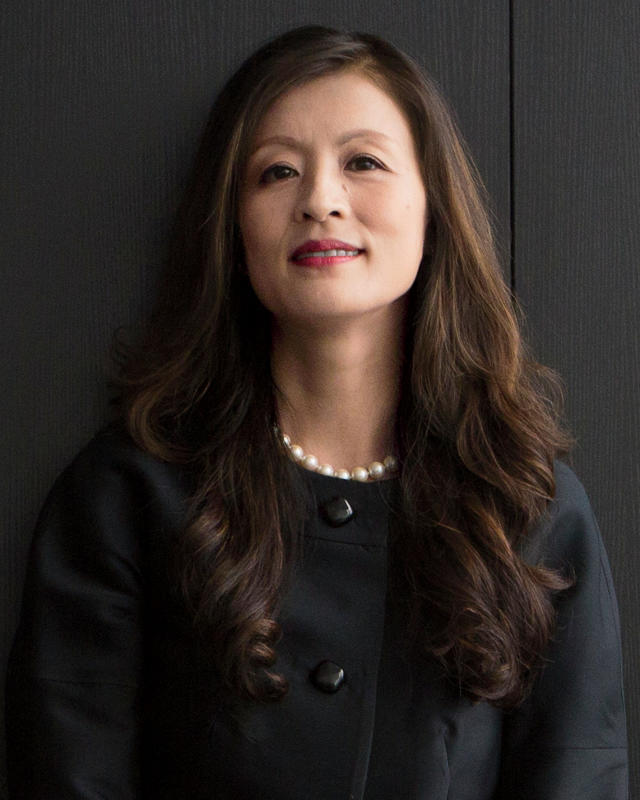
Unlike the other tech CEOs, Ma has created his own movie production arm. Alibaba Pictures recently set up a 22,000-square-foot office in an art deco–style building in Pasadena, California, and Ma installed Zhang Wei as his Hollywood liaison and president. An elegant, Harvard MBA who started out as a TV talk-show host and once said she wanted to be China’s Oprah Winfrey, Zhang, along with Ma and other Alibaba delegates, has been very active in courting studios about producing, coproducing, and acquiring movies for Alibaba. (In October 2014, fresh off his U.S. IPO, Ma even scored that most coveted of Hollywood experiences, attending a Lakers game with WME co–CEOs Ari Emanuel and Patrick Whitesell, along with the actor Jet Li.) Alibaba has made deals with Lionsgate and Disney to bring their shows and movies to China via Alibaba’s subscription streaming services.

Zhang Wei, president of Alibaba Pictures, intends to use data to find movies that can be huge in China and around the world.Photo: Jasper James

As of mid-March, Alibaba Pictures has yet to release its first project. While Wanda Group, the Chinese real estate conglomerate, bought the AMC theater chain in 2012 and recently acquired Thomas Tull’s Legendary Pictures for $3.5 billion, Alibaba is currently more interested in being involved in individual films. That hasn’t prevented Hollywood wags from including Alibaba in its rumor mill. After Viacom stated that it would be interested in selling a minority stake in Paramount, which released M:I 5, Alibaba has been mentioned as a likely acquirer. “Huayi Brothers has put money into STX Entertainment and other companies. Hunan TV is putting money into Lionsgate,” says Janet Yang, the Joy Luck Club producer who is working on a feature film about Ma, citing two other Chinese entertainment firms that have bought into Hollywood. “[Alibaba] wants to feel like they can effect change.”

Alibaba’s ideas about how to disrupt entertainment production may prove highly unpopular. Last fall, a company executive said that it would not hire screenwriters, choosing instead to find movie ideas from fan-fiction authors. Alibaba then expected them to cobble together scripts in an online forum. The Chinese creative community was outraged, and the company quickly walked back the comments. Coincidentally, the gambit was reminiscent of Amazon’s initial efforts to enter Hollywood via a crowdsourced script platform before it got serious and started writing big checks.

Ultimately, Alibaba may end up acting more like Netflix, which relies on a combination of algorithms and personal taste when it comes to green-lighting projects. At the outset, Alibaba’s emphasis is more on data than anyone’s golden gut. All of the information that it has amassed about its customers’ buying habits and entertainment choices will inform which movies it’ll make. “[Alibaba’s] vision of what they are going to do quite precisely calibrates to what they know will also perform well in China,” says one person who has met with Alibaba Pictures executives. “They’re very focused on fanboy, a lot of fantasy, children-related content and not a lot of other stuff.”

Ma is very much an Old Hollywood–style showman. He throws group weddings for Alibaba employees and has serenaded his company with a rendition of “Can You Feel the Love Tonight?” while wearing a long, white wig and red-and-black leather biker jacket. As Ma finds his way in the entertainment business, “Give ’em what they want” may become more than just the mantra of a quant jock but also the populist cry of someone whose prime interest is keeping his customers happy.

Before Ma attains movie moguldom, though, his company has to overcome cultural hurdles as it tries to negotiate film deals. Unaccustomed to Hollywood’s highly specific way of packaging projects, Alibaba has frustrated some of its potential partners. “They don’t really get it yet,” says one. “They’ll draw a line in the sand on something that they shouldn’t. Then they will be very flexible on something they shouldn’t be. It’s a little backward, but they’re learning.”

As with the other tech outsiders acclimating to the entertainment industry, the question of how well that process goes may come down to how badly Hollywood feels they need Alibaba. The company represents access to the fastest-growing movie market. While the U.S. box office is seeing modest single-digit improvement, China’s is thriving with a 50% increase in 2015. The Chinese film business is notoriously unfriendly to foreigners given its censorship laws, not to mention marketing challenges (trailers do not usually play before movies in theaters there) and the fact that studios have no control over release dates. By partnering with Alibaba, American studios would have a trusted partner with e-commerce and social media prowess.

“People want muscle in China,” says Schuyler Moore, a partner at Stroock & Stroock & Lavan, who worked on a $500 million deal between China’s Perfect World Pictures and Universal to fund a slate of films. “Alibaba certainly provides it.”


As the tech titans bring their rivalry from commerce and community to original content, their attempts to best one another mean that the unintended beneficiary is anyone who can create or package entertainment. Not only does the industry get even more serious buyers—in addition to Netflix, Amazon, Apple, Alibaba, Facebook, and Google, don’t forget about Verizon, AT&T, Snapchat, and Twitter—but it also has a surprising set of new collaborators.

For decades, the tech and entertainment industries have not trusted each other, insisting that the other offered far lesser value. While Hollywood hollered, “Content is king,” Silicon Valley countered with “Platform rules.” Now the two worlds are more cooperative. “Fresno’s the halfway point between Silicon Valley and Hollywood,” says ICM’s Perelman. “And while neither I nor anyone else in this business is looking to move to Fresno, conceptually there’s this understanding, like, you need us and we need you; let’s find the best ways to work together.”

Read More

How Apple Could Make the iPhone 7 Completely Warrant-Proof

Apple’s face-off with the government over providing access to the iPhone used by one of the San Bernardino shooters may be over, but the re-awakening of another case in Brooklyn, New York, proves that the two parties are destined to dance again—perhaps many times over, unless Apple can find a way out of the dispute. It might.

The FBI won a court order in Riverside, California, compelling Apple to go as far as to write a new OS for the phone used by Syed Farook in order to break into the device. It has since abandoned that order, but the Justice Department has now petitioned a federal court in Brooklyn, New York, to force Apple to help it access the contents of an iPhone owned by a convicted drug trafficker.

Apple has been put at a disadvantage in these jousts by having to admit that enabling access to these phones was indeed technically possible. Apple’s basic position is that while it has the technology and expertise to hack into encrypted data on an iPhone, it’s the wrong thing to do. Creating even a single hack, Apple says, could endanger the security of millions of iPhones because there’s always a chance that the hack might somehow be released into the wild.

Apple has indeed helped the government access encrypted data on iPhones, but when the FBI demanded in open court that it create a special operating system to hamstring the security features on the Farook phone, Apple drew a line in the sand.

In the future, Apple may not be put in this position. It could design the iPhone 7 and change iOS in ways that will make the answer to the question “can you break into this criminal’s iPhone?” a truthful “No.”

But how? That’s where things get a little intense.

When you power down an iPhone or put it to sleep the device automatically generates an encryption key, which can only be re-opened with a decryption key. The decryption key is automatically generated by the phone when the user inputs their passcode. Prior to iOS 8, the decryption key existed on the user’s device and with Apple. Since iOS 8, the decryption key exists only on the user’s device.

So Syed Farook’s iPhone 5c, which ran iOS 9, limited the number of times the FBI could guess Farook’s passcode to 10. After the tenth incorrect guess the phone would disable the decryption key—data gone, game over. The OS also put progressively long time delays between login tries, making the process of guessing the passcode using a computer take years.

By building these features into the OS, Apple essentially removed itself almost entirely from the business of securing and accessing the data on a user’s iPhone. But, as we learned from the San Bernardino case, it didn’t remove itself completely. That is, Apple has the ability to create a different version of the OS that, when loaded onto the phone, shuts all those security measures off. Then, a computer program can quickly run through thousands of possible password combinations to eventually guess the correct one and unlock the device.

Could Apple remove itself completely from the security chain, so that it couldn’t do anything to help open an iPhone—even if the device contained, say, the immediate location of a hidden dirty bomb?

That’s very likely, but there are big trade-offs involved, security experts tell me. The more Apple removes itself from the secure relationship between user and phone, the more it gives away its ability to access the system when something needs fixing.

Cooper Levenson attorney and security expert Peter Fu explained it like this: If you’re trying to get rid of all the rats in the sewer system, you can cement over all the drains so no rats can get in. But if the rats get in some other way, you have a big problem getting down into the sewers to remove them.

Apple could almost certainly alter iOS to preclude the user, Apple, or anybody else from downshifting into an earlier OS version with weaker security measures.

“It can remove all of its administrative privileges altogether,” Fu says. This seems extreme, but then “no one would have guessed that Apple would have written itself out of the ability to recover lost passcodes,” Fu says.

Nobody knows exactly what would happen if Apple went to these lengths. There would almost certainly be unforeseen and unintended consequences.

One consequence would be Apple losing the level of access it needs to fix security problems in the OS that come up over time.

As in the “rats” analogy, Apple would be effectively sealing off its own access to its OS, eliminating its ability to fix security exposures that might be revealed as time goes on.

“Who says there’s not another Heartbleed?” Fu says. “We are removing our ability to combat those kind of vulnerabilities.”

Better to leave the drains open. “In order to make a secure system, you need to make it a little less secure,” Fu says.

Also, Apple may have a few of its own secret methods of bypassing security and accessing user data—methods that are used only in Cupertino. It may not want to give those up.

The Hardware Approach

The other general method of hacking into a locked iPhone is by compromising the hardware.

The reason the FBI gave for backing off the San Bernardino court order is that a third-party had emerged with a technique for breaking into the Farook iPhone without Apple’s help. Some in the security community speculated that the third party supplied a method that calls for the removal and duplication (“mirroring”) of the phone’s NAND memory module, where the encryption and decryption keys are stored. With the contents of the NAND mirrored on another module, a fresh copy of the encryption keys can be swapped on a new module every time the 10 login limit is reached, effectively extending the number of possible passcode guesses to infinity.

The most obvious way for Apple to thwart this kind of attack would be to relocate those encryption keys to a more secure place on the phone—someplace that can’t be physically removed from the device. One possibility is the Secure Enclave in the CPU, where the unique transaction codes for mobile payments are stored.

But this approach, security people say, comes with serious drawbacks. The reason the crypto-keys are kept on the NAND module is so that they can be quickly accessed when the user enters a passcode or passes the fingerprint scan. After all, we unlock our phones thirty times a day or more. Storing the keys on the CPU would slow down the act of unlocking the phone. And the CPU itself might have to grow bigger to handle the increased power requirement, which in turn could compromise the svelte design of future iPhones, Fu says. Moreover, making such a radical change to the CPU would take time.

“Apple needs time to re-spin hardware, so don’t expect any Secure Enclave updates until the iPhone 7s,” says security researcher Dan Guido.

A more practical idea, perhaps, is to keep the crypto-keys on the NAND module and make the module much harder to remove from the circuit board of the device. This might be done by attaching the module to the circuit board with heat glue, Fu says. Attempting to remove it would break the module or the circuit board. Either way, the phone becomes inactive.

Pushed To The Defensive

Over the past couple of years Apple has been steadily tightening the security on its phones and making it more difficult for law enforcement to execute search warrants that extend to the contents of the devices. The matter came to a head when the FBI won its court order requiring Apple to help hack the Farook phone.

When the FBI called “time out” in that case, I believed Apple might continue to strengthen the security of its phones, but still leave a tiny crack in the backdoor in case the government presented a profound need to break into a terrorist’s device in the future.

My opinion changed when the Justice Department recently revived a criminal case in Brooklyn, New York, again trying to compel Apple on the strength of the antiquated All Writs Act. The Brooklyn case involves a convicted drug peddler, while the San Bernardino matter involved mass murder by people with connections to international terrorist groups. The government has an even lesser need to gather information from a locked iPhone in the Brooklyn case than it had in the San Bernardino case.

The Justice Department’s reviving of the matter proved that the stand-off over the Farook phone was no one-off, and that the government was looking to establish precedent for using the All Writs Act to quickly gain access to private iPhone contents in a broad array of future cases.

Now that this card has been played, it becomes very likely that Apple will do everything it can to further remove itself from the secure relationship between user and phone. If the government has a warrant to search a locked iPhone, and the user—like Farook—isn’t around to enter the passcode, Apple will simply, truthfully, be unable to help.

Read More

Why Netflix Is Binging On “Chelsea”

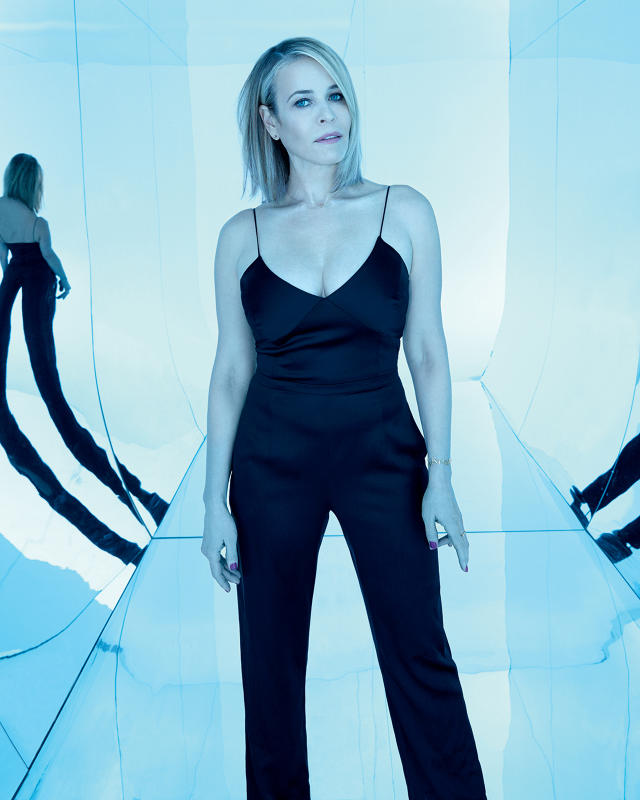
“This place is so vast!” says Chelsea Handler, nearly breaking into a Mary Tyler Moore–like twirl inside an empty soundstage on the Sony lot.

“There’s so much room to maneuver!” In a few weeks, carpenters will begin construction on the set of her upcoming Netflix talk show, scheduled to begin streaming in 190 nations on May 11. But for now, on a warm February afternoon in Culver City, as Handler takes in the 16,000-square-foot space for the first time, all she has is her imagination.

“I’ve never actually been in here before,” she says. “I’ve only seen where the green room and the guest rooms are going to be. And”—she pauses for effect—”where they’ll be putting the bar.”

If all goes according to plan—and things usually do in Handler’s world, even if she insists she never has a plan—the 41-year-old stand-up comedian turned E! network star turned streaming pioneer will be spending a large chunk of the next several years inside this soundstage. The exact contours of the show are still being worked out by Handler’s staff of 50 producers, writers, editors, and researchers. What’s certain is that the program, called Chelsea, will stream three nights a week—Wednesdays, Thursdays, and Fridays—and feature interviews with a variety of guests about often touchy topics: “abortion, parenthood, the electoral college . . .” she says, by way of examples, plus a regular dose of Handler’s bawdy, transgressive humor. It will feature taped field reports—mini versions of the four hour-plus Chelsea Does documentaries that debuted on Netflix back in January. There will be a live audience and lots of wild-card elements; earlier in the day, Handler held auditions for a child correspondent (“I’m looking for a 10-year-old with attitude,” she says). All of this will be packed into a running time of 30 minutes, more or less. In the world of streaming video, nobody is watching the clock too closely.

Right now, she’s in the middle of a series of creative meetings. “People come and pitch me ideas,” she says, gesturing vaguely toward where a lazy Susan–style stage she’s proposed might go (“There’ll be a section if I’m interviewing three or four people, the way Dick Cavett sometimes did, and another if I’m interviewing one of the show’s correspondents,” she explains). “That’s how I’ve always worked. Give me options. I’ll tell you what I like and don’t like. I know what the show is. I just can’t put it in words. But it won’t be regimented. You’re not going to turn it on three nights a week and have an opening monologue, a guest, and a band. It’ll be completely different.”

In one respect, it already is: It’s on Netflix.

Talk shows on broadcast airwaves have censors, commercial breaks, and nightly ratings. Talk shows on basic cable—such as Samantha Bee’s Full Frontal, on TBS—get away with racier conversations but still have to cut to ads (and deal with jittery advertisers). Even pay-cable talk shows, like John Oliver’s, on HBO, follow relatively traditional formats—a guy behind a desk—and exist within an old-fashioned corporate bureaucracy. But a talk show that runs on a streaming service—especially one that prides itself on giving talent virtually unlimited creative freedom, that is intent on rewiring the viewing habits of the whole world, and that has a $6 billion budget with which to do all of this—can be pretty much whatever its host wants it to be. On Netflix, there are no ads, no ratings (the company has never revealed how many people watch its shows, much to the annoyance of its competition), and no network notes, at least none that Handler can recall. The company “is amazing,” she says.

Netflix’s laissez-faire attitude toward talent has resulted in some groundbreaking programs, including Beau Willimon’s presidential soap opera, House of Cards, and Jenji Kohan’s women’s prison dramedy, Orange Is the New Black (as well as a few stinkers, like the recent Full House reboot, Fuller House). Even so, Handler’s show will mark a major departure. For one thing, the company that popularized binge viewing will be releasing episodes in a radically old-fashioned way: one at a time. Each will go live at 12:01 a.m. and remain on servers indefinitely, for subscribers to stream as they please—but it’s as close as Netflix has ever come to traditional appointment television.

What’s even more unusual for Netflix is that the show will be covering current events in some degree of real time. This is a move that CEO Reed Hastings and chief content officer Ted Sarandos had hinted at during an earnings call last October. “On the news side, we are definitely being more adventurous,” Sarandos told reporters, somewhat cryptically. When Hastings responded by asking Sarandos, “What’s the likelihood that we compete with Vice in the next two years?” Sarandos answered, “Probably high.” The Internet immediately lit up with talk of Netflix’s grand new plan to expand into news, and the streaming service quickly backpedaled. In a follow-up email, a corporate spokesperson attempted to clarify these remarks by telling reporters, “We’ll leave the news business to folks like yourself.”

Chelsea Handler Solves Your Thorniest Work Problems

Handler, of course, isn’t a newsperson. But talk shows are by nature tethered to the stories of the day, and having her on the air discussing them marks a shift for Netflix, transforming the media company from a simple streaming service, such as Hulu or Amazon Prime Video, into a living, breathing part of the news cycle. “It doesn’t have to be ripped from the headlines every episode,” Sarandos says of the show’s content, backpedaling a little bit more. “If Chelsea is picking the right topics, the conversation is going to be around for a few weeks. But, yes, it’s definitely more topical and timely than what we usually do.”

There are risks for Netflix. After all, the company is putting its money and reputation (and 90 minutes a week of bandwidth) behind a button-pushing, controversy-prone comedian who once dressed a little person as Adolf Hitler to celebrate Germany’s World Cup win, whose sharp tongue has made enemies of everyone from Angelina Jolie to Nick Cannon, and who has posted more topless photos of herself than Vladimir Putin (which may explain some of her 5.8 million Twitter followers and 2.1 million Instagram followers). Talk-show hosts function as brand identifiers: Jimmy Fallon is in many ways the face of NBC, just as Jon Stewart was for Comedy Central. Placing an unpredictable force like Handler behind a talk-show desk (even if she doesn’t end up having a desk) could put Netflix in awkward situations.

At the moment, though, Handler is just looking for a place to sit down. After winding through hallways and taking some stray turns (“Is this an office?” she asks after opening a door into what looks like a closet), Handler finally finds the only part of the soundstage with furniture—a large backstage lounge with a couple of old sofas presumably left behind by a previous tenant. As the star settles into a couch, the production assistant asks if he can fetch her a bottle of water.

“No,” she says, deadpan. “Just bring us a condom.”


Ted Sarandos was chatting with his wife at the Vanity Fair Oscar party in February 2014 when Handler crashed their conversation. “She asked me if I was the Netflix guy,” recalls the exec, who’d never met the comedian before. “She asked a lot of questions. She was really tenacious about it. She wanted to know how things worked, how Netflix was different. It was a real deep dive. It was almost as if she was on a fact-finding mission.”

Which, in fact, she was.

At the time, Handler was in the middle of her seventh year hosting Chelsea Lately, the entertainment-news channel E!’s popular five-day-a-week, late-night talk show in which she engaged in gossipy banter with Hollywood celebs and poked fun at her little-person sidekick, Chuy. The gig had made her rich (the network reportedly paid her between $8 million and $12 million a year) and famous (each episode drew upward of a million viewers) and even something of a groundbreaker: the first female comic to succeed at late-night-TV hosting, something not even Joan Rivers was able to do. Reruns of her show aired so many times a day that it sometimes seemed like the only thing on the network. There was even a spin-off, After Lately, a semi-fictitious reality series in which the cast and crew of Chelsea Lately was shown bickering and engaging in other backstage shenanigans. That drew a million viewers per night as well.

But after taping more than 1,000 episodes (and interviewing almost as many Kardashians), Handler was miserable and ready for a change. She was tired of celebrity gossip, appalled at the audience’s hunger for it, and, most of all, fed up with being on the network that produced programs like Leave It to Lamas and Bridalplasty. “It was incredibly frustrating,” she says. “You’re a reflection of the company you keep, and I wasn’t impressed with anybody. The people I was working with on the network side, they never could think big. I just wanted to leave, to be somewhere else.”

Handler has trusted her instincts ever since she was a kid in suburban New Jersey. “I never really have epiphanies,” she says, “I just have thoughts and act on them. I’m impulsive.” Her dad was a used-car salesman and Jewish; her mom, a German-born homemaker, was Mormon. (“We celebrated both Christmas and Hanukkah, but I consider myself Jewish,” she says.) The youngest of six children, she was raised without much supervision, and it clearly left her with an independent streak. After about “10 minutes” of community college, Handler says she left for L.A. to become an actress, moving in with relatives who had nine children, three dogs, and a parrot. Living in what she calls a “disgusting” environment, she waited tables between auditions for commercials and sitcom parts, growing more and more restless. “I just wanted my life to begin,” she says. “I wanted everything to start. I wanted my break.”

It came soon, in the unlikely form of a DUI conviction. On the eve of her 21st birthday, while driving home from a bar with an equally sloshed friend—”midway through [singing] the second chorus of Whitney Houston’s ‘I Wanna Dance With Somebody,’ ” as Handler describes the incident in her 2008 best-selling memoir (the second of five), Are You There, Vodka? It’s Me, Chelsea—she was pulled over by the police. After a night in jail, she was sentenced to DUI classes, and it was there, while regaling fellow offenders with the details of her arrest (like how she called the white cops who busted her “racists” and drunkenly complained about being “racially profiled”), that she realized her calling. “You ought to do stand-up,” her DUI classmates told her.

“Stand-up was my entrée into the entertainment world,” she says. “I didn’t have to act out somebody else’s words. I could just stand there with a microphone and nobody would interrupt me. It’s the most narcissistic thing you could probably do.”

Next act: After leaving E!, Handler was drawn to Netflix by the freedom to explore.

Within about six years, she had landed development deals with Paramount and NBC. She scored her first regular role, on an Oxygen network sketch-comedy program called Girls Behaving Badly (sort of an estrogen-infused Punk’d), and started getting invitations to appear on the E! network’s “countdown” reports, in which various comedians riff on news and celebrity gossip.

Ted Harbert, who was then the head of the Comcast-owned network, spotted her and saw potential. In 2005, he offered Handler her own sketch-comedy program, The Chelsea Handler Show, which tanked. A year later, he tried again, giving her Chelsea Lately. Around this time, Handler began a relationship with Harbert (now chairman of NBC Broadcasting) that had E! employees gossiping around watercoolers for four years, until they broke up. “Now that I look back on it, it was very odd,” she admits. “It was tricky. But my mom had just died. And he was the president of the network. He was this older guy who thought I was the greatest thing in the world. So I returned the favor.”

As she says: She has thoughts and acts on them.

Handler did so again in March 2014, a month after chatting up Sarandos at that Oscar after-party, when she decided to leave E! and broke the news to her bosses in a way that only Handler might think was a good idea—by all but announcing it on The Howard Stern Show. “E! has just become a sad, sad place to live,” she said on the air. “They don’t know what they’re doing, they have no ideas . . . everything they do just is a failure.” Handler says she was surprised when E! execs assumed it was a ploy for a fatter contract. “Because I felt unhappy, I just assumed that they knew,” she explains. “But they thought I was negotiating. I told them, ‘You don’t have to give me more money. It’s not about that. I don’t care. I don’t want to be on this network anymore.’ ” An E! spokesperson says, “Chelsea called E! home for seven years, and it’s disappointing that she continues to criticize the network that launched her career.”

Working blue: Handler looks forward to being free from traditional network restrictions.

Handler’s next move became a subject of intense speculation in the TV world. That spring, the late-night airwaves were in flux. At CBS, Letterman had announced his retirement from Late Show, and Craig Ferguson’s contract with The Late Late Show was about to expire. Once Handler left E!, rumors began to circulate that she was after one of those jobs. An Instagram photo that she posted showing a packet of papers with the CBS logo on them and a caption reading “business meeting” didn’t do a lot to dispel this talk. But Handler was merely stirring the pot. “Those were just meetings that people wanted to take,” she says. “I was offered several jobs. I was offered syndication late-night shows. But they were all conversations that didn’t get far, because there was no point. I was never interested. I didn’t want to step into somebody else’s shoes. I didn’t want to be on some other late-night show doing the same shit again.”

What she was interested in—and why she sought out Sarandos at that party—was Netflix. “House of Cards was on, and I just thought it was cool,” she says. “I thought they were smart, that they knew what they’re doing, and that I could do something different there. I thought, I want to work at that table.”

She asked her manager, Irving Azoff, to set up a meeting with “the Netflix guy” at the streaming service’s Beverly Hills headquarters. (Azoff did nothing to dissuade her. “He never tells me what to do—he knows better,” she says.) Sarandos, who attended the meeting, along with Netflix’s VP of content acquisition, Lisa Nishimura, and VP of original content, Cindy Holland, was “stunned that Chelsea hadn’t signed with one of the CBS shows,” he says. “But it wasn’t like we were looking to make a talk show. It wasn’t like, ‘Let’s find a host.’ She came in, and we met, and it was more like one of those we-don’t-know-if-we-should-do this-because-we’ve-never-done-anything-like-this-before kind of things.” Turns out those are Netflix’s favorite types of meetings. “We’re all about experimenting,” says Nishimura. “And the timing was terrific.”

Although Netflix didn’t do any formal crunching of Handler’s numbers—there were no focus groups or analyses of her ratings on E!—the company had detected signs that the streaming audience was receptive to a Netflix talk show. “Anecdotally, if you look at what’s happening in late night, increasingly people want consumer control,” says Nishimura. “Whether it’s digital clips of Fallon’s celebrity lip sync or [James] Corden’s singing with celebrities in cars, you’re starting to find that consumers aren’t watching late night as appointment TV.” Though Netflix is a closed system, it plans to share video clips via YouTube and its social channels to drive viewers to the show.

[youtube https://www.youtube.com/watch?v=bcIAMiH6bIE?rel=1&autoplay=0]

“Near-live,” is what BTIG Research analyst Rich Greenfield calls this new form of entertainment consumption. “People love the late-night conversation, but they want to watch it on their own terms. And Netflix wants to be a part of that.” Near-live programming, he explains, fits with the company’s push to keep people paying $7.99 a month. “That’s the most important thing for Netflix. They don’t care about nightly ratings—they care about subscribers coming back. And with Chelsea Handler, they see a talent with a passionate fan base and a person who knows how to use social media to drive awareness.” When Handler isn’t posting risqué photos of herself (“I think nudity is funny, especially when it’s inappropriate,” she says), she’s tweeting out a cascade of zingers, put-downs, and comedic observations. “I found a piece of pretzel in my underwear this morning,” she tweeted recently. “Conclusion: I was intoxicated, unsupervised, and abstinent.”

Surprisingly, Handler says social media doesn’t come naturally to her. “Would I do these things if I wasn’t famous?” she ponders. “No. If I didn’t have something to promote, I wouldn’t. It’s just something you have to do right now. But once I got the hang of it, it has been fun to interact with fans. As silly as it sounds, it feels good to do it.” It also makes smart business sense, undoubtedly providing leverage in negotiating with, say, major streaming companies. In June 2014, Handler and Netflix signed a deal reportedly valued at $10 million—or five times what John Oliver is said to be paid by HBO—for the show, the docuseries, and a stand-up special for Netflix (Uganda Be Kidding Me Live, released in October 2015). Then she acted on impulse again, announcing that she’d be taking a break. She didn’t come back for 18 months.


Handler is lounging poolside at her Bel Air home, getting high. And then doing leg squats.

She’s filming one of her talk show’s field reports, this one focusing on a personal trainer who believes that inhaling marijuana before a workout enhances the exercise experience. He’s brought complicated-looking vaporizing devices, which Handler needs help operating—”I’m more of a drinker,” she says apologetically, after coughing up a lungful of cannabis—as well as some brutal-looking sports equipment. A camera crew is capturing it all, as Handler’s two furry mutts, Chunk and Tammy, watch with weary detachment from the other side of the pool.

Handler has shot a number of these mini docs, not all of them in the comfort of her tastefully decorated home—which happens to be Esther Williams’s old mansion, remodeled with ultramodern conveniences, including a guest bathroom with an electronic toilet control panel so high-tech you need a degree in physics just to flush. Last week, she had flown to Moscow (“a horrible place,” she notes, making a face) to do a segment on young girls in the Russian figure-skating program. Next week, she’ll hop over to Las Vegas to watch a hypercompetitive youth baseball tournament. There will also be segments on a vocal coach who teaches trans women how to sound more feminine and a visit to the home of a polygamist family. Judging from what’s going on around her pool—Handler, high as a kite, swinging a kettle bell so clumsily it’s a wonder she doesn’t accidentally propel herself into the pool—these taped segments will be pretty hilarious.

But like her four heavily promoted Chelsea Does docs, which premiered on Netflix in January, they’ll aim to be more than merely amusing. One reason Handler was drawn to Netflix was that she could express a smarter, more intellectually curious side of her personality. “When we were on the network, I can’t tell you how many times we had to take jokes out because of advertisers,” she says. “It was constant bickering back and forth. You can’t do this, you can’t do that. There was no creative license.” But with Netflix, if she wants to get high and do push-ups, it’s not a problem. If she wants to spend 30 minutes discussing presidential politics, that’s cool too. If she wants to take an epic hiatus before starting the show—traveling the world, buying a house in Spain, and having a brief fling with a crew member aboard a ship—nobody is going to complain.

“I sat down at Netflix and told them I want to take [time] off, and then I could come back and do some documentaries, if they would hook me up with some of [the filmmakers] they had access to,” she recalls. “And they were like, ‘Great!’ ”

The Chelsea Does docs—about racism, marriage, drugs, and Silicon Valley—were Handler’s idea, but from Netflix’s point of view they were a savvy segue into a talk show, a tone test for a new sort of Chelsea. They’re not exactly Ken Burns–level productions, but they are certainly more intelligent and thought-provoking than anything Handler ever did on E!. In the Silicon Valley episode, she ventures to the tech capital to “talk to them about their algorithms—and find out what an algorithm is.” She rides a hoverboard, interviews an AI robot (“Are you trying to annoy me?” it asks her), and pitches her own app, an iPhone program that fakes an incoming call or text so that you can sneak out of meetings (Gotta Go! went on sale on iTunes the week the doc was released).

“The docs gave us the opportunity to try a new format,” says Sarandos. “The interview style, the roundtables, the outside segments—all of those are things that will be in the talk show.” As Handler puts it, they “served as a great bridge. I wanted to show people that I’m taking a real big jump into something new, that I was reinventing myself.”

To continue that evolution on the talk show, Handler has enlisted Bill Wolff, the producer who, in 2005, discovered an obscure Air America Radio host named Rachel Maddow and turned her into MSNBC’s No. 1 star (he left in 2014 to help launch Vice for HBO). “Chelsea and Rachel are actually similar people,” Wolff says, “smart, funny, hard-working, and transparent. When you meet Chelsea or Rachel, they’re just as they appear on TV.”

Handler spoke with several potential producers before connecting with Wolff. (“We met at a hotel bar for one drink—and that became 10 drinks,” she says.) Wolff for his part, appreciated Handler’s creative instinct. “The vision was essentially in place,” he remembers. “She told me that she wanted to put together a show in her voice, but that was about the broader world.”

The process of creating a talk show is always the same, Wolff says, whether the host is a wonky Rhodes Scholar with an Elvis-like ‘do or a community college dropout (who says she reads 75 books a year and who has written five best sellers of her own). “You spend a lot of time together,” he explains. “You find out what she’s interested in, what she likes to do, the things she finds funny. And over the course of weeks and months, you piece together a proper form for her self-expression. You try to exploit the things that make that person special.”

What’s tricky about Handler is that the very things that make her unique—an instinct to push buttons and a fearlessness about offending—aren’t traits typically associated with talk-show schmoozers. Netflix has content deals with other stars—Adam Sandler, the Duplass Brothers, Brad Pitt—but the person the company has chosen to beam into subscribers’ bedrooms, night after night, in 190 countries, happens to be the one capable of insulting entire nation-states with a single zinger (she still hasn’t apologized to Serbia after an offhand remark about that country being a “disappointment” sparked a nationwide boycott of her E! show).

Still, Chelsea—and Chelsea—may be a gamble worth taking. “Neflix is about reaching all four quadrants,” explains analyst Greenfield. “Fuller House is very different from House of Cards, which is very different from Orange Is the New Black. And Chelsea is different, as well, which is what Netflix wants. If you think about what a video bundler does,” he goes on, “it provides a little bit of food programming on a food channel, a little comedy on a comedy channel, a little drama, a little bit of everything. And that’s what Netflix is doing with Chelsea Handler—it’s providing a totally different type of content. Because, remember, Netflix doesn’t really want to be a network, it wants to be a video packager. Its goal is not to replace HBO. It wants to replace Comcast.”

That stoned woman by the pool, lurching around with a kettle bell? She is merely its latest secret weapon.

Read More

Starter Auction House: Paddle8 Guides Affluent Millennials Into The World Of Fine Art

Fashion entrepreneur Andy Spade is known for bringing a retro-chic sensibility to the clients he advises through his Partners & Spade branding studio. But fans got a rare look at his personal style and decorating choices this winter when he consigned dozens of artworks and collectibles from his recently sold Long Island home through the virtual auction house Paddle8. By the time the sale closed in early February, the startup had sold everything from a Jean-Michel Basquiat drawing (valued at $50,000) to a six-foot-tall stuffed giraffe ($200 to $300).

The sale was a triumph for Paddle8 cofounder Alexander Gilkes, who first floated the idea when he ran into Spade at a dinner at Tory Burch’s New York apartment. Gilkes, a former Phillips auctioneer and Old Etonian with a penchant for tweed jackets, launched the auction house in 2011 with cofounders Osman Khan and Aditya Julka. Their audience: the rising tide of affluent millennials just beginning to build art collections. While have-not millennials living at home and paying off student loans capture headlines, research firm FutureCast reports that there are 6.2 million millennial households in the U.S. earning $100,000 or more each year. “Today you’re buying a $1,000 print,” says Khan. “Over the next few years, hopefully you grow with us and you’re the purchaser of a million-dollar work.”

The key to unlocking the potential of these customers: providing them with inspiration and guidance to start their own collections. In addition to hosting theme-based sales, Paddle8 courts novice buyers by asking prominent figures in the worlds of art, entertainment, and fashion to curate auctions. Some of these tastemakers, including Spade and the writer–bon vivant Bob Colacello, list pieces from their own collections. Others coordinate with Paddle8 specialists to source work by their favorite artists. Such was the case when Vogue‘s Grace Coddington curated an auction of prints—all nudes—by photographers such as Mario Testino and Annie Leibovitz. Ellen DeGeneres opted for items from her collection, as well as pieces that inspired her line of home decor. “We’re big believers that people can learn to collect through the eyes of great collectors,” Gilkes says.

This strategy helped Paddle8 sell about $70 million worth of art last year—double its 2014 total. That puts its 2015 revenue in the ballpark of $20 million, based on the commission fees it charges the buyer (20%) and the seller (8%). The momentum persuaded investors, including artist Damien Hirst and gallerist David Zwirner, to pour $34 million into the company last year. “Our gutsy view of the world is that with time, there will be three auction houses: two serving the upper end of the market and Paddle8, serving the middle market,” says Gilkes, in a nod to auction giants Christie’s and Sotheby’s.

That may be optimistic, considering the established auction houses are increasingly entering Paddle8’s medium of online sales—and, with it, that coveted middle ground. “The things you could buy at Sotheby’s are surprisingly accessible,” says David Goodman, Sotheby’s head of digital development and marketing. After joining the company last summer, he spearheaded a series of online-only sales hosted by eBay. The sold-out auction of Star Wars memorabilia (which included hundreds of action figurines and a 42-inch-tall Chewbacca toy) attracted 400 new bidders. Christie’s, for its part, has Christie’s Live, a platform for participating virtually in a live auction, and expects to host more than 80 online-only sales this year.

One difference between buying a Luke Skywalker figurine from Sotheby’s and, say, the Darth Vader Companion by KAWS on Paddle8 is how the items are verified and shipped. Paddle8 uses photographs and documentation to verify items remotely, then ships directly from consignor to buyer. Specialists at Sotheby’s and Christie’s, even for online sales, confirm the authenticity of all works in person. “That’s what differentiates us, that peace of mind,” says John Auerbach, managing director for e-commerce at Christie’s.

Gilkes stands by the Paddle8 model, which he says enables lower fees. The company employs specialists to virtually authenticate every item; if records are missing or concerns remain, Paddle8 arranges for an in-person inspection. Once the company owns the rights to sell a piece, it can execute the transaction in a matter of weeks. “There are fewer pain points: We’re not printing a catalog or setting up an exhibition, so we’re able to move more nimbly,” says Kate Brambilla, a Christie’s veteran who now manages Paddle8’s collector-driven auctions.

“I think there’s a deep-seated interest to see how people live with art and objects, to see how somebody pairs a contemporary work of art with an antique desk accessory,” she says. “There’s an appetite for that—not only seeing into these collectors’ personal lives but also how you can bring it into your own home.” Ikea shelving optional.

Read More

Why LinkedIn Is Changing The Way It Interacts With Students

LinkedIn has spent years trying to reel in students. Since 2014, it had an entire portal dedicated to helping students find universities, connect with other students, and even choose potential majors. Now the company is retooling the way it interacts with students.

Starting today, LinkedIn’s sole student focus is to get them jobs. In fact, it’s doing away with many of its student services because they’ve found that students just want help finding a job. LinkedIn is launching a new app—dubbed LinkedIn Students—that does just that.

According to the app’s product lead Ada Yu, the company spent the last year surveying students and found that most simply wanted employment help. Before, the company offered a variety of services for students—many of which were tailored to life inside of college. They included tools that would help high school students find compatible colleges and other programs that gave students information about potential fields of study. Those services will all be gone on May 16.

In their place, LinkedIn is offering this new app. It asks the users three questions: What school are you in?; What major are you?; What year do you graduate? From there, LinkedIn Students connects students with alums who are in similar fields, recommends entry-level jobs at companies within the students’ network, and also recommends articles that may be relevant to the users’ interests.

According to Yu, students have found LinkedIn’s offerings up until now to be daunting. “They don’t have anything to put on their profile,” she said, so why would they consider using the site?

What’s also important, says Yu, is getting the students connected to the right people. And in this modern age, the way to actually get a job (or at least an interview) is to know someone who has an in. In fact, most of the 2015 graduates who found jobs on LinkedIn were in technology and professional services, which often require finding someone within the industry to connect with.

Yu and her team hope this new app will help get students more new jobs in more industries. The ultimate goal is to give students access to opportunities and, with LinkedIn’s millions of users, Yu says it’s “in the position to facilitate some of these conversations.”

Now she and her team wait to see if students will use the app, and whether this will change 2016’s job demographics.

Read More

YouTube First Major Platform To Launch Live 360 Video

YouTube today will become the first major platform to offer live 360-degree video.

Since March, the Google-owned service has offered 360 video, which allows viewers to see what’s going on in a scene in 360 degrees. Facebook, too, has made 360 video available for some time.

Until now, though, no one of any scale has offered it live. Music fans will be among the very first to experience it when YouTube live-streams the famous Coachella festival in 360-degrees this weekend. YouTube has live-streamed the festival for years, but this will be the first time it has broadcast both weekends of the two-weekend event. Coachella teased 360 video during the first weekend, but it wasn’t live.

[youtube https://www.youtube.com/watch?v=_JSAKQuEj7w?rel=1&autoplay=0]
Coachella teased 360-degree video this weekend.

For users, the video will be available on any device—be it an iPhone, an Android tablet, or the web. People with virtual reality headsets like Google Cardboard or Gear VR will also be able to take advantage of the new service.

In the early going, content creators will be able to automatically produce live 360 YouTube video using one of two consumer-level or prosumer-level cameras—either the ALLie, or VideoStitch’s Orah 4i. Each of those systems comes with technology that auto-stitches imagery from multiple lenses. Creators will eventually also be able to use other 360-degree cameras, like Ricoh’s Theta S, to automatically produce live 360 video, but for now, such devices will require an API.

Facebook did not comment on its plans for live 360 video. Some, like tech commentator Robert Scoble, think widely available live 360 video will be a reality within months. At its recent F8 developers conference, the company unveiled a reference design for its own high-end 360 degree camera.

YouTube chief product officer Neal Mohan told Fast Company that its on-demand 360 video will also feature spatial audio that will allow users to hear what’s happening in the direction it was filmed. That’s a key factor in making realistic VR video, as well as a critical element in VR storytelling.

In the early going, spatial audio for live YouTube 360 video will only be available on Android devices, but the company expects to soon add iOS support, Mohan said.

As for live 360 video, Mohan added that the quality will be high, with support for 1440p at 60 frames per second.

“You can imagine making it feel like you’re in that front-row seat for that Beyoncé concert,” Mohan said. Or, this weekend, for Coachella.

Read More

What It’s Like To Attend A $3,400 Public-Speaking Coaching Session

The command was simple: Create an intro to any story beginning with the word “imagine.” The leader gave us all a topic to talk about: energy conservation. I had 10 seconds to prepare. After a pause, I theatrically pointed at my head and said, “Imagine.” I then tried to fill in the blanks, talking about a future where open fields were filled with wind turbines. But my thoughts became jumbled and terror filled my face. I tried to set the scene of a utopic future where there was neither an energy crisis nor global warming, but the sentences didn’t link, and all that escaped my mouth was gobbledygook.

The woman beside me, my partner for the time being, was kind. “The beginning was good,” said the PR executive, 40. But it was clear I had bombed.

We were attending a two-day conference: me, this woman, and about 90 other people all together in a large auditorium. The event—hosted by the company Own The Room—dubbed itself a retreat where “executives from different industries come to learn to communicate more effectively and have a great time in the process.” The price tag was indeed C-Level at $3,400, but it did boast Sheryl Sandberg’s endorsement.

The room was filled with many people who occupied spots near the top of their org charts. The people attending were separated into about nine different groups. My enclave included a VP from Johnson & Johnson, someone from PepsiCo, and a few CEOs and founders. I surveyed the room and found other groups contained similar rankings. I even spotted the brother of a well-known politician in our midst.

Most of the people I talked to generally had the same goal in mind: They frequently gave presentations—be it to a small group of employees or to hundreds of people—and wanted to improve their performance. Some had issues with engaging people, others just wanted to be more dynamic. One woman sitting beside me—a health care company executive—was filling in for a colleague of hers, but had heard about it from numerous other people. While people were happy to chat about why they were attending, nearly everyone declined to be named, as they were all there on their companies’ dime.

As for me, I’ve always considered myself an okay public speaker. I know how to tell a good joke, and audiences generally react well enough. But I’ve never focused on the exact things that I say, or the way that I relate to an audience. Comparatively, most other people in the room seemed to have led more than a few important meetings. I was probably the least experienced public speaker in that room.

The day was segmented into large and small group activities. The first hour, we just worked on introducing ourselves. We learned the tricks of drawing in an audience. “Tell a story,” the coach told us. Never begin with your name. The very first exercise was learning how to master this seemingly simple task. We were partnered with someone else, and then told to introduce ourselves in an engaging way—without leading with our name.

This led to some intriguing, if not necessarily business appropriate intros. One person, a 40-year-old man who worked for a company that helps people with substance abuse, opened, “I am a recovering alcoholic.” A dark-haired man in his thirties said, “I know more about breasts than you,” and then went on to talk about his lactation-focused business. It’s true, if these people had merely stated their names, I probably wouldn’t be as interested in what they do. I simply opened with, “I like to tell a good story.”

Another key “trick” was learning to hone language. One coach explained that most language spoken day to day is “weak”—that is, the “uhs,” “ums,” “yeahs,” etc. We spent the rest of the day trying to pry these vocal tics from our repertoire. A participant—another corporate VP—and I were asked to deliver an engaging 15-second presentation about where we see ourselves in 10 years. The catch: Every time we uttered those weak, bad words, we had to drink a sip of watered-down Coke (it was a “drinking game,” get it?). I went first and had to drink four times. My partner went second and didn’t drink once. “It’s easier going second,” he conceded.

If you’ve ever been to a session about how to present, these exercises and tricks aren’t necessarily new. Own The Room fits squarely in an industry that’s been around for decades: executive coaching and education. Since boardrooms have been ground zero for presentations, employees have worked to enhance their ability to communicate and engage.

The market is quite big, too. One report from 2014 put the global corporate training market at over $130 billion. And another 2015 report saw that same market growing from 2015-2019 at compound annual growth rate of 8%. Everyone I talked with agreed that they saw this as an opportunity to have a few days off and practice these skills. A few had been to other Own The Room events, and simply liked attending because it gave them the ability to work further on honing the craft.

Of course, there have always been people claiming to have the secrets for good group communication, much like business and personal gurus have long claimed to know the “secrets to success.” The cult of entrepreneurship bleeds into Own The Room’s pitch. There are zen-like secrets for mastering a good business presentation, as well as allusions that the greatest executives are the most persuasive and masterful of language. Every mini session had one, if not many, catchphrases that were both helpful and grandiose. “Tell a story,” repeated one presenter. Another coach’s mantra: “Get over yourself.” A session I attended was simply titled, “Connect First.”

With all of these tools, the ultimate goal is for the participants to be able to have a more commanding presence over an audience. The event culminated with each person giving their own two-minute presentation about whatever they choose. Hopefully they would take these tools back home and lead a great meeting, or deliver a perfect pitch, or give the best presentation.

But as Own The Room CEO Jack Harvey told me later on in the day, the executive coaching space is fractured. There are dozens of individual coaches out there—each with their own specialties—and a few companies offering events like this. But the offerings are still all over the place and there’s no one leader.

One company, Reboot, is similarly positioned. It calls itself a coaching company that helps “entrepreneurs and their teams deal with the internal ups and downs of entrepreneurship.” Like Own The Room, it hosts bootcamps and coaching sessions. But Reboot is tailored more for the startup environment and the growing and learning entrepreneur. And there are big names—especially in Silicon Valley—known as guru coaches including Bill Campbell (who worked at both Apple and Intuit and has reportedly coached numerous tech giants) and Ron Conway (a well-known angel investor who’s been known to pitch in for the companies in his network).

Jack Harvey

Own The Room appears to want to court both entrepreneurial upstarts, as well as be used in Fortune 500 boardrooms around the world. According to Harvey, in the last year his program has been used by about 100 companies (including Facebook and LinkedIn) in 27 countries. He adds that bigger corporations with upwards of 300,000 employees have begun to bring the Own The Room program into their offices.

Harvey sees this as proof that there’s a market opening for a big name in the executive coaching industry. More importantly, he doesn’t consider Own The Room a one-off coaching session provider. Instead, it’s a “communication methodology.” Like the coaches under him, Harvey uses big ideas to underscore what his company can do. It’s not just showing people how to present in public, he assured me, it’s something more: “How do they release their full potential?”

This is the kind of language you hear at both an executive training session and a new agey self-realization retreat. And to the untrained eye, the two are quite similar. Harvey—along with all the other coaches—would, of course, balk at this comparison. He reminds me that no Own The Room employee ever lectures while giving a coaching session. Also, the presenters never talk about themselves. “You will not find a bombast,” he says. And he is right—the sessions I attended were neither self-reflexive nor philosophy laden. And they were very interactive.

The grandiose sense is perhaps just the name of the game at these events. If you’re paying the hefty price, then you might as well feel like you’re in a special club of highfalutin gesticulations and potential professional realization. And everyone I talked with seemed okay with this. One HR executive saw a dual sense at the event. While the coaches seemed like they were teaching life tips, she didn’t quite get that. “I feel like I’m acting,” she said. “I want to feel more authentic.” The coach assured her that would come with practice.

In the end, I did learn some good public speaking tips that I’ll likely use in the future. But I’m probably still not qualified to stand in for your next executive conference. My full potential has yet to be realized.

Read More