Press Enter / Return to begin your search.

Meet The Chef Who’s Working Toward Gender Equality In The Culinary Industry

Chloe St-Cyr the chef earned her chops across the globe. From studying at Québec’s Hôtelière Des Laurentides and working at high-end eateries in the province, to cooking alongside Michelin-starred chefs in several five-star hotel properties in Dubai, the 25-year-old has already won awards, including Taste New Zealand 2015, and placed third in Emirates Salon Culinaire’s Young Chef of the Year 2015 competition.

Yet even in that short space of time, St-Cyr kept bumping up against the systemic sexist behavior so prevalent in the culinary industry. In addition to hearing a chef refer to the kitchen brigade as “the boys,” St-Cyr tells Fast Company, “People think they are paying me a compliment by telling me that I work like a man.” It’s even baked into (pardon the pun) the uniforms. St-Cyr observes, “It is almost impossible to find a chef’s jacket tailored for someone with boobs.”

“Not one of them is particularly awful,” she notes, “but when they started to add up is when I realized how much of a man’s world the culinary industry actually can be.”

The industry doesn’t typically reward female talent, either. The most recent report from Glassdoor on the gender wage gap found that chefs are second only to computer programmers, with a nearly 30% difference between what women earn compared to men in the industry.

“I strongly believe only the talent of the individual chef and the market should dictate your paycheck—not your gender, age, or looks,” says St-Cyr, crediting her upbringing for her stance on equality. “I was raised in a family where I learned that women can achieve as much as men, no questions asked,” she says.

Chloe St-Cyr

So St-Cyr took matters into her own hands. In December 2015 she started MiumMium, a community marketplace for on-demand chefs. It allows individuals to hire qualified kitchen talent to cook in their homes or event venues for private dinners or special occasions.

She’s not the first to launch a hiring platform for on-demand personal chefs. Among them: Kitchensurfing dispatches chefs in the New York City area, and La Belle Assiette has about 700 chefs working in six European countries.

But her model differs in a significant way: St-Cyr is trying to chip away at gender imbalance and democratize the culinary arts both for chefs and diners. Chefs are not asked to state whether they are male or female upon registration for the marketplace. This is also to protect LGBT chefs from any discrimination.

“The goal is not only to get women the same pay level as a man, but to help all of my fellow chefs and cooks to make ends meet,” she says. With MiumMium, a chef who earns $15 to $20 an hour at their regular job can drastically increase their standard of living by serving one or two MiumMium meals per week, St-Cyr explains.

To do this, St-Cyr gave chefs control of their menus and their prices. “If the menu is interesting and well-priced, clients will come,” she explains. “As demand for that chef increases, they will have the liberty to increase their price. This is how the cream rises to the top, genders become irrelevant, which is how it should be,” St-Cyr says.

MiumMium scaled quickly since its debut with more than 10,600 chefs registered and catering to locations in North and South America, Europe, Australia, New Zealand, and parts of Asia.
 
Right now, the average MiumMium dinner is about $55 per person, which includes the chef, the food, the transportation, the cooking, the service, and the taxes. “Only gratuities, which are never requested, are discretionary,” she notes. MiumMium takes 9.09% of each total meal cost as their portion, and the chefs keep the rest.

She also notes that chefs are equitably promoted on the platform. The homepage is updated daily to showcase the most recent menus, regardless of chef or location.

Setting prices for services is where things get a little tricky. At MiumMium, St-Cyr says supply and demand are taken into consideration. Some menu options may be hard to find in some areas, so the chef can up their cost. Or, like Uber’s surge pricing, some chefs may ask for more depending on the timing. Experience like working for celebrity clients can also drive up the cost.

But there’s a that goes beyond fair compensation for talent. In a competitive market, the lowest price will often win the day. That’s good news for women, who generally expect to be paid $14,000 less than a man in the same role. But set the cost too low, and customers might wonder why it’s so cheap.

Even though there is no confirmed data as to how many male versus female chefs are getting work through MiumMium, St-Cyr is convinced that equality will win the day. “I don’t measure success on genders, I measure success at our partners’ level by increasing payout to the chefs overall,” she explains. “Success will be achieved when all of our chefs get regular bookings through MiumMium, whatever their race, gender, or sexual orientation.”
Read More

A New Device Stimulates The Brain To Boost Athletic Performance

The Navy SEALs have a high-tech secret weapon. From a distance, it looks like a regular pair of headphones. But as its wearer exercises or navigates unfamiliar terrain, the Halo Sport device beams a flow of electrical pulses to the brain’s motor cortex. The result, its creators claim, is a supercharged ability to learn new skills and build physical strength—a brain primed for performance.

Daniel Chao, a Stanford-trained neuroscientist, and Brett Wingeier, a biomedical engineer, founded Halo Neuroscience in 2013. After 10 years of working on a surgically implanted pacemaker for the brain (the Neuropace, which is now used to treat epilepsy), they turned their attention to less invasive technology. Halo Sport uses electrodes to stimulate the brain’s motor cortex, which controls planning and voluntary movements. Energized motor neurons send stronger signals to athletes’ muscles, which Chao says allows them to reap greater rewards from every rep.

[youtube https://www.youtube.com/watch?v=uW-ltuS6rXg?rel=1&autoplay=0]

With an injection of more than $9 million in funding from backers including Andreessen Horowitz, Chao and Wingeier are partnering with the U.S. military and professional athletes to build evidence that supports their claims. The initial results are promising: Members of the U.S. Olympic ski team have reported a 31% improvement in their propulsion force, and the Air Force noted a 50% reduction in training time for drone pilots. Select NBA and MLB players are also testing the device.

Despite encouraging results, Chao is careful not to overstate Halo Sport’s benefits. He’s concerned that grandiose claims might one day trigger questions about the fairness of some athletes using technology to stimulate the brain, which has been referred to as “neuro-doping.” For now, he’s focused on expanding the user base beyond professional athletes. He and Wingeier are testing potential medical applications for Halo, including as a stroke rehabilitation tool. They’re also working on making it available to amateur athletes. A first wave of devices, released in February for $750 per unit, sold out in less than a week. Chao hopes that the early consumer demand will draw attention to the still-nascent field of neuro-stimulation. “It’s a lucrative opportunity that no one has heard of,” he says.

Read More

What Happened When I Stopped Using Screens After 11 p.m.

Although I am a productivity aficionado, forming new habits doesn’t always come easy to me. Given how busy my days are, finding the energy to start doing something differently is tough, even when I know it would be a helpful change. Over the years, I’ve repeatedly failed to develop habits, from getting out of bed as soon as my alarm goes off to finding a consistent workout schedule to carving out time to read more books.

To combat that, my husband and I started a tradition: Every year we add a new habit to our lives for the month of January. Some years they stick, some years they don’t, but it’s been a nice way to push ourselves to try changing our lifestyle in a positive way. This year, we decided to try something that seemed crazy: We vowed to stop using any screens after 11 p.m. No TV, no computer, not even my trusty iPhone.

As a serious night owl and busy entrepreneur, working late into the night is a daily occurrence, so it should go without saying that this experiment was terrifying. It felt like I’d be cutting hours of work from my day and making the rest of my waking hours more stressful as a result. But I’d read the research on what screens do to your heart and brain, so for just one month, I was willing to try it.

I’ll start with the spoiler: It was awesome and life-changing and you should definitely do it for at least four short weeks. In fact, I loved it so much that I extended the experiment permanently (give or take one really busy week at work).

Not sold on giving your iPhone a bedtime? Here are the four things I learned from cutting off my screen time:

1. I Can Actually Do It

Let’s start with the most surprising lesson: As someone who regularly emailed well past midnight or 1 a.m., stopping cold turkey at 11 p.m. seemed insane. But, I found that as long as you’re dedicated to trying this, all it takes is closing that laptop at 10:59 and not looking back. In fact, I closed my computer on a partially written email more than once. Guess what? No one died. No one even panicked. In the beginning, I found it helpful to set a quiet alarm at 10:45 to remind me that I should switch to wind-down mode—and to make sure I did things like set my morning alarm, since I use my phone for that, too.

2. I Prioritized My Work Better

Since I now had a hard deadline each night after which no work could be done on my computer, I started to prioritize my to-do list slightly differently. Instead of just jumping into my inbox top down, I kept a list of things I absolutely had to handle that night. I would start working with that list in mind, answering key emails that were holding others up (and finishing articles like this one when they were due). After completing my list, I could choose to keep working on other non-urgent work until curfew time, knowing that it was all icing on the cake and helping me to get ahead for the next day. When 11 rolled around, shutting down came with a feeling of accomplishment, since I had done the most important work first.

3. I Finally Found Time to Read

Now, just because I stopped using screens at 11 doesn’t mean that this night owl could just start falling asleep at 11 p.m. Rather than laying awake, though, likely thinking about work the next day, I chose to pick up a book. And then another, and then another. During the month of January, I read more than the previous six months combined. In fact, I could now read for an hour and still be asleep earlier than my normal time. And the best part? I didn’t feel like I had wasted any time by doing work and watching filler TV in the background. Dare I say it, instead of melting my brain, I’m getting smarter.

4. I Slept Better

This should come to no surprise, but turning off my screens had a huge impact on the quality of my sleep. Turns out all those studies were right. I fell asleep more easily, stopped having sporadic insomnia, and—wait for it—hit snooze way less! After years of trying everything I could think of to curb this addiction to five more minutes, I solved it the old-fashioned way: Giving my brain a much-needed break. As you can imagine, the better I slept, the easier it was to wake up and start my day.

In fact, within a week of starting this experiment, I found that snoozing wasn’t the only other habit I was able to change. Turns out that I inadvertently stumbled upon a trigger habit: I was reading more, sleeping more, and spending more quality time with my husband. All of this led to me feeling less stressed and better prepared to start each day. All in all, a huge positive change in my life, all thanks to a single new habit.

This article originally appeared on the Daily Muse and is reprinted with permission.

Read More

What Do Women Want At Hackathons? NASA Has A List

For the past four years, NASA has hosted the Space Apps Challenge, one of the biggest hackathons on the planet. Last year, 14,264 people gathered in 133 locations for 48 to 72 hours to create apps using NASA’s data. A team in Lome, Togo, built a clean water mapping app; one in Bangalore, India, created a desktop planetarium; another in Pasadena, California, created a pocket assistant for astronauts. This year’s hackathon happens this upcoming weekend.

While NASA has been able to attract participants from all corners of the globe, it has consistently struggled to get women involved. NASA is working very hard to change this. “The attendance is generally 80% male,” says Beth Beck, NASA’s open innovation project manager, who runs the Space Apps Hackathon. “It’s more everyman than everywoman.”

Beck noticed that female participation in hackathons seemed to drop after the middle school years. At last year’s hackathon in Toronto, for instance, there were two sections: one for students and one for adults. Girls made up at least half of the student participants. “The middle school girls looked like honey bees, running around in little packs to learn about the technology,” she says. “But in the main hacking area, it was all guys. I wanted to know what happens that makes them lose their curiosity and enthusiasm.”

Beck has been closely scrutinizing how the hackathon unfolds around the world to better understand why the gender ratio is so skewed. She’s been documenting what happens at NASA’s event, surveying studies about women in science, and interviewing several dozen other scientific organizations about their experiences. “We wanted to find the key levers that would allow women to start pouring in,” Beck explains. “At first, we were frustrated because there didn’t seem to be any patterns that we could grasp.” But eventually, after months of research, several trends began to emerge. Here’s what she discovered.

Photo: Flickr user US Embassy

Women Want Safe Spaces

Every year, NASA creates several different app challenges around concepts like the solar system, Earth, the journey to Mars, aeronautics, and space stations. Beck thought that perhaps women were put off by these themes because they were too technical or too dry. “I thought that if we did topic X around data, women would flock to it,” she says. “But time and time again, we did not find this.”

It turns out that women are not significantly more interested in certain subjects than others. What they cared about most was being able to explore these topics in a space that felt friendly and supportive. “They are looking for signals that they will be in a safe space where they feel like they belong,” Beck says. Often, these signals are very straightforward: they seek out pictures of women on the event’s webpage and look for women’s names on the speaker panels and planning committees. Even having language in the hackathon announcement specifically calls on women can be helpful.

Women Want To Prepare

Another interesting thing that Beck discovered is that women who are brave enough to attend these events want to go a day early to get the lay of the land and perhaps form a team in advance. They want to become more comfortable with the physical space where the hackathon will take place and learn as much as possible about the topics. “When the hackathon then becomes flooded with men, they feel ready for it,” she says.

With this insight, NASA has been organizing data bootcamps the day before the hackathon, which specifically target women, although people of both genders are invited to participate. Last year, NASA held an inaugural bootcamp in New York, where it emphasized that diverse experiences were valued. There was also an opportunity to get an introduction to coding, making, retrieving, and manipulating data sets, as well as storytelling. A full 75% of boot camp attendees were women, and all of them stayed on for the New York hackathon, making up 50% of hackathon attendees. “This was the highest ratio of women to men of all the hackathon events,” she says. This year, 49 different bootcamps will be held around the world.

Women Want Childcare

While men described hacking as something that they did in their spare time, the research showed that many women often had many other family responsibilities and couldn’t just attend a hackathon for fun. And this wasn’t just true in developing countries, where girls were often tasked with childcare and chores, while boys could focus on science. In the U.S., events where there was childcare provided were much more highly attended by women than those that did not have that option. Beck has been pushing for each location participating in the hackathon to offer childcare support.

Women Want To Contribute

NASA’s hackathons are open to people with diverse skill sets—not just people who know code. Beck has found that men are more likely to participate because they are interested in space; they simply show up with ideas. Women, on the other hand, need to feel like they have the appropriate battery of skills to contribute. With this knowledge, Beck has found it helpful to make it clear that each team needs strong storytellers who can explain the value of the app. “Once they’ve had the opportunity to experience the hackathon, then can then go off to learn how to code so they can come back the following year with even more skills to contribute,” she says.

Photo: Flickr user Amanda Ghanooni

Beck is still in the process of implementing these findings to boost women’s participation at the hackathons, but she’s encouraged by the early results. Last year, for instance, two female students in Cairo noticed that the hackathon has specifically called out to women and they wanted to host a local chapter of the hackathon. Their professor, however, told them that women could not host the event. The women reached out to NASA themselves and Beck wrote to them personally, saying that she highly encouraged them to create their own event. That Cairo event ended up being the largest Space Apps hackathon in the world, with 700 participants and a wait list of 300. “Here were two women who were told that they couldn’t do it,” Beck says. “We told them that they were, on the contrary, exactly who we were looking for. That’s all it took to make it all right for them to launch their event.”

Read More

The Psychology Behind Why People Support Certain Presidential Candidates

Why does a Trump supporter support Trump and a Sanders supporter support Sanders? At first that question might seem a bit nonsensical. Or it’s easy to jump to the “obvious” answer: because each candidate is espousing views their specific supports agree with. Yet for some, that answer is based on outdated old-world political science reasoning.

In the burgeoning field of neuropolitics, the science of studying how a person’s brain affects their political thoughts and actions, or why a particular person supports one candidate over the other comes down to the fact that the supporters’ underlying psychological thought processes determine, to a large extent, whether they see a candidate’s leadership style as appealing or not.

Several studies have now shown that physical differences in the brain predispose people to being liberal or conservative. “There are some brain differences overall, not completely,” says Dr. Gail Saltz is a psychiatrist, psychoanalyst, and bestselling author who has written widely about the psychological factors underlying relationships. “But they are enough that when you look at certain styles of thinking and the brain structure that correlates with that, conservatives tend to process things in a more fear-based, amygdala-based way, and liberal thinkers tend to think in more grays, and new information is more likely to change the outcome of their thoughts.”

But it’s not just a fear-versus-logic type of thinking that is the deciding factor of who supports who. If it were the primary race would be long over for each party. Yet on both sides of the political aisle there is still a lingering divide that can, in part, be explained by other more nuanced and deeply embedded psychological traits that dictate whether a candidate’s leadership style is appealing or not.

Photo: Flickr userGage Skidmore

Donald Trump

Ronald Christie, a Washington political strategist who served as former deputy assistant to Vice President Dick Cheney and special assistant to President George W. Bush sums up Trump’s leadership style in one word: “Erratic.”

“The hallmark of a successful presidential campaign requires the articulation of a clear message of why this particular candidate has the experience, background, and vision to lead America,” says Christie. “With Mr. Trump thus far, we have heard a candidate articulate his vision to ‘Make America Great Again’ with very few specifics. Calling on the U.S. to build a wall on the Mexican border and provide them with the bill isn’t demonstrative of how he would lead on immigration reform, for example.”

Christie notes that “a slogan isn’t leadership” but points out that Trump’s rallies don’t disappoint from an entertainment perspective—he’s been to one in New Hampshire. “Trump campaign rallies have had the feel of a reality talk show before a live studio audience rather than an opportunity to rally supporters behind his specific policy proposals.”

But the reason this erratic, reality talk show style of leadership has put Trump in the lead in the GOP primaries is because his style taps into a powerful emotion, says Saltz: Anger.

“I think the thing that’s most notable about Trump’s leadership style is anger,” says Saltz. “There is something about his angry message and the vociferousness with which he imparts it that has really resonated up until at least this point.”

Saltz says there are a few physiological reasons for this. The first is identification. “It’s the psychic defense mechanism of identification. When they have a candidate who is primarily resonating not just anger, but blaming specific others for what they’re angry about, it is reassuring. It is always reassuring to people who are very angry and frustrated to feel there is someone at fault and therefore, someone one could pinpoint and make a change so that whatever is making you angry could stop.”

As for who is at fault: Anyone from Obama to Mexicans, according to Trump. And while it’s sometimes easy to dismiss Trump supporters’ anger as out of control, especially given the violent antics at some of his rallies, Saltz says there are plenty of people who are naturally more aggressive than others–-and Trump’s style plays out that aggression.

“Biologically, some people are more aggressive. They are more in touch with angry feelings. Anger is not only acceptable to them but is a, let’s say a manly way of expressing themselves,” she says. “The goal of each of these candidates is to get their primary voters to come out and vote. To do that you have to emotionally stir them a pretty fair amount. You have to galvanize them. Anger is a high-valence emotion as opposed to, says, comfort or the like. [Trump’s] leadership style has tapped into a big enough sector that feel very angry about their current lot in life—those which may or may not have someone to blame, but who will seek someone to blame. That’s very appealing.”

Photo: Flickr userGage Skidmore

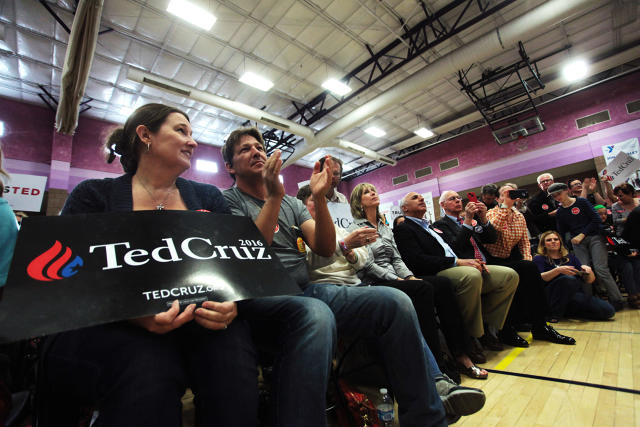
Ted Cruz

As for the other GOP contender, Christie calls Cruz a “skilled orator” and says he “has a unique ability to articulate his evangelical faith while discussing his vision for America that is impressive both on the campaign trail as it was during the GOP candidate debates.”

Indeed, listening to Cruz speak at rallies can sound a lot like listening to a sermon by a fire and brimstone evangelical preacher. But while that may work for a primary, Christie has doubts if such a leadership style would work in a general election campaign. “He can be inspiring to those who support him–it remains to be seen whether that can translate into broader support within the GOP as well as Independents who would be critical to a general election strategy that would lead to victory.”

If Trump’s leadership style is anger-based, Saltz says Cruz’s leadership style is based on another high-valence emotion: Fear. As opposed to anger, which seeks someone to blame, fear plays to our thoughts of the worst possible outcomes coming to pass. Evangelical faiths have severe otherworldly punishments for not following the rules set out by their religion. Cruz’s ideologically pure (from his faith’s point of view) preacher-like leadership style resonates with the religious far right.

“The idea of being an ideological purist is appealing to people who are voting for him,” says Saltz. “I can really understand why people are turning out for him; people who find being evangelical appealing, or faith-based appealing, or anti-science, which it is, appealing.” Yet like Christie, Saltz has doubts about how well Cruz’s preacher/evangelical leadership style will work in a general election. “Everybody can tap into being an ideological purist, but we’re not a pure country. We are these pockets of very different ideologies.”

Photo: Flickr userCory Doctorow

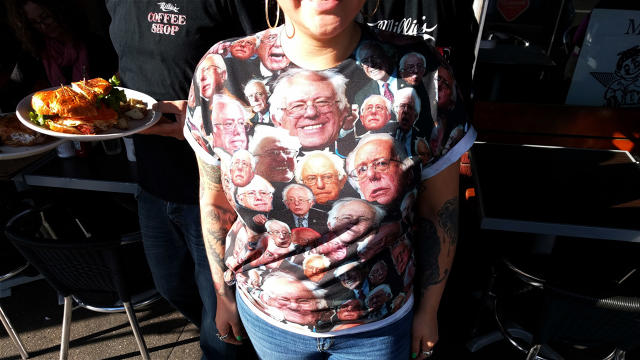
Bernie Sanders

When it comes to the Democratic primaries, Christie calls Sanders’s leadership style “refreshingly authentic.” You rarely ever think Sanders is saying something or acting in a certain way because a focus group told him it’s what people want to hear or see.

“Whether one believes the next president of the United States should break up big banks, go after Wall Street or provide universal health care coverage, there is no question that Senator Sanders says what he means and means what he says,” notes Christie. “Belief of authenticity in American political leaders today is anemic; Sanders leaves no doubt of what he would seek to accomplish were he elected president.”

And while he says Sanders is “truly without a peer in ability to inspire and motivate his core base,” Christie has doubts whether his far-left liberal leaning goals, even when combined with his authentic leadership style, could be enough to mobilize more centrist voters in a general election.

The belief that authenticity is virtually anemic in politics today resonates with people who have become psychologically desensitized to an electorate who expect lies to be the norm, says Saltz.

“Psychologically, what’s galvanizing people to Sanders, is the identification with unfairness,” says Saltz. “The concept of unfairness forms in early life. All kids feel at some point or another that things are unfair. To some degree, it’s a difficult developmental step to accept that things are unfair in life, and some people never really accept that. It resonates to some degree with a lot of people. Sanders’ leadership style and message taps into the fact that life was never a level playing field. A lot of his message is, ‘It has been unfair and my mission as a leader will be to make it much more fair.'”

Yet due partly to the neurological differences in people’s brains, while some people deal with this unfairness with anger, which Trump takes advantage of, Sanders is about being “revolutionary in the most positive sense possible,” Saltz says. “He’s not doing it in a fear-based way. His style appeals much more to people who look at things in gray tones. It’s more, ‘Let’s be uplifted and correct the fairness in a spirited way,’ and not because otherwise you’ll be smited and die, or raped, or whatever.”

Photo: Flickr userPhil Roeder

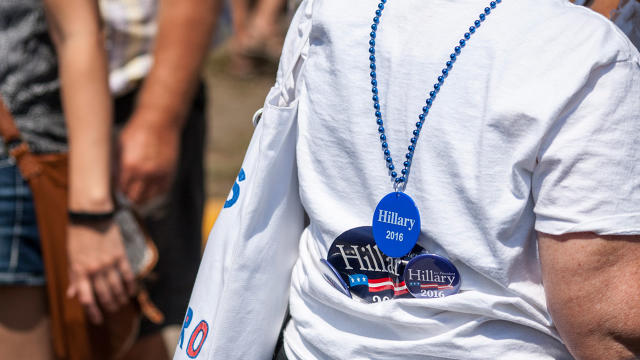
Hillary Clinton

And then we come to Hillary Clinton, the once-inevitable Democratic nominee who has seen her route to nomination stymied by the meteoric rise of Bernie Sanders. Christie calls Clinton’s leadership style “quixotic” and notes that as the former First Lady, Senator and Secretary of State, “Hillary Clinton should have entered this presidential contest as a demonstrable front runner” yet she’s become a candidate many find inauthentic. “I would posit that Clinton’s campaign rallies only reinforce the impression that she will say or do anything to become elected rather than articulate a concrete set of beliefs/skills she would bring to the Oval Office.”

Saltz says that from a leadership perspective, Clinton probably has a bigger challenge than the other candidates. Those that support her see a leader who comes across as not only strong, but one who has the leadership experience most suited to being president. “If you are a liberal-minded person, and you see things in gray, you’re thinking informationally,” says Saltz. “You’re going to be like, ‘What did she do as Secretary of State? How many pieces of this puzzle has she already done?'”

Yet Saltz concedes that she understands why even some liberals see Clinton as someone who is always trying to say the right thing to the right audience. “In my opinion, as a psychoanalyst, I think [Clinton’s leaderships style] is most suffering from maternal transference,” Saltz says. “Meaning, I think that as a woman she cannot say the same things that a man can say and have it feel, and come across, the same way. I think that when she says, for example, ‘Shame on you’, it conjures up images of how a mother would say ‘shame on you’ for some people in a way that feels very cringe-worthy.”

This leadership style issue is, of course, a gender double standard, but one Saltz says Clinton, though unfairly, always needs to take into account when presenting herself.

“I do think that probably it’s been hard, because probably people are advising Hillary all kinds of different things which don’t, frankly, allow for as much authenticity, because this is probably a struggle, this issue of being female,” she says.

For example, explains Saltz, if Clinton said, as Cruz did, “We will carpet-bomb [ISIS] into oblivion. I don’t know if sand can glow in the dark, but we’re going to find out” it wouldn’t come across well for her. The statement wouldn’t be seen as powerful, as it was seen for Cruz. Powerful, assertive statements “don’t resonate as well for women,” says Saltz.

“I’m not saying that’s right. It’s not right. I’m just saying it is. It just is. Women leaders have always suffered from this, and the higher that they get, and the bigger and more powerful that they are, to some degree the more this becomes an issue.”

And it’s a leadership style double standard that could hurt Clinton in the general election if it comes down to her and the increasingly presumptive GOP presidential nominee Trump.

“Trump can say one thing and then say another thing—a completely different thing—and people are not like, ‘Wow, he seems really inauthentic.’ Because of the psychological traits of his supporters, the vociferousness of this anger actually makes them feel that he’s really authentic, like he’s authentically angry,” says Saltz.

“If Clinton does exactly the same thing, in fact not even as big a turnaround, a much more subtle thing, liberals who are listening with a more gray zone brain are going to think, ‘That sounds a little different than before. Now I’m thinking that’s not so authentic.'”

Read More

What All The Presidential Candidates Are Missing

My 12-year-old son loves the United States. He’s always wearing red, white, and blue, drawn to anything with an American flag. He even dressed as Uncle Sam for Halloween. But talking with him about this year’s presidential campaign has been challenging. In part, that’s because the political discourse has included a coarseness and belligerence that we don’t condone in our household. More important, none of the candidates have expressed a coherent, compelling vision for the America my son will inherit.

The world we live in is changing faster than it ever has, fueled by advances in technology, bioscience, and artificial intelligence. These changes are powerful and exciting and sometimes a little scary. They hold the seeds of our future; their impact is already both unmistakable (people are holding smartphones around the globe) and unstoppable. At Fast Company, we devote our energies to illuminating this evolving future—to show how DNA testing and genetic editing may affect medical care or how self-driving vehicles will alter our transportation system. This issue’s coverage of may seem playful, but the transitions under way in the global entertainment industry are dramatic. All across the economic landscape, organizational structures are shifting, with a heightened priority on new skills and tools that can unlock new opportunities.

Yet little of this transformational wave seems to figure into the candidates’ messages, which seem more focused on protecting the way things are (or have been). If they express any sentiment about the future, it seems to revolve around fear. I recently attended South by Southwest Interactive in Austin where the spirit couldn’t have been more different from what you see in the presidential debates. Appropriately, the conversations at SXSW included questions about the downsides of technological advance—from security concerns to the ongoing digital divide—but these questions were raised to try to cope with the march of progress rather than to stop it.

In the months ahead, I hope that forward-looking issues will become more prominent in our political dialogue. (With that in mind, we will be rolling out coverage here.) Acknowledging how far ahead the United States is in many of these realms—our critical role in this evolving future—would not only be inspiring but also truthful. At the same time, it is essential that we figure out how to prepare more Americans for these future opportunities.

For years, we at Fast Company have wondered which non–U.S. companies would break out to become global brands on the level of Coca-Cola and Nike. Yet the breakouts we have seen have come from Amazon, Facebook, Google, Netflix, Uber, and more. Our candidates should focus on explaining how their policies would further extend this kind of success and help all of our citizens participate and compete in the global economy of today and tomorrow. Let’s give my son and his peers more than rhetoric and nostalgia; let’s give them a modern reason to cheer.

Read More

“Twisted And Mischaracterized”: How FanDuel’s CEO Is Fighting Back Against Detractors

LeBron James hammers down a thunderous dunk, and 18,000 fans at the 2016 NBA All-Star Game erupt in a reverberating “Ooohhh!”

It’s Valentine’s Day at Toronto’s Air Canada Centre, where James, Stephen Curry, Kobe Bryant, and other stars are dazzling the crowd. A-list entertainers, from Drake to Kevin Hart to Jon Stewart, fill the courtside seats, while NBA commissioner Adam Silver monitors the action at half-court a few rows back. But one of the most significant people attending tonight’s game is someone most fans probably don’t recognize, an inconspicuous Irish math geek seated in row nine: Nigel Eccles, the 41-year-old CEO of FanDuel.

Over the past year, Eccles has turned FanDuel into the most controversial player in the world of sports entertainment. The company’s web and mobile apps let fans bet real money on rosters of athletes like LeBron and Kobe, from $1 to as much as $10,000 or more. Known as daily fantasy sports (DFS), FanDuel’s approach has exploded in popularity: More than 6 million people have registered to play, and last year, the company doled out $1 billion in winnings. FanDuel has raised more than $360 million in financing, has been valued at more than $1 billion, and has locked in deals with 32 NBA and NFL teams.

But as daily fantasy sports has grown, so has scrutiny. Critics argue that FanDuel, the industry leader, is essentially an illegal gambling ring operating at Silicon Valley scale. The service, they say, has streamlined the process and coated a criminal industry in a sheen of legitimacy, thanks to backing from the likes of Google Capital, Comcast, and the NBA. Eight states already prohibit DFS, and dozens more are currently weighing how to handle the phenomenon. With a host of investigations and lawsuits ongoing, FanDuel’s future remains a question mark.

Eccles shows no doubt that FanDuel will survive the regulatory pressure and government skepticism. Looking at him at the All-Star Game, as he munches on a pulled-pork sandwich and claps softly after each swish, you’d never know he’s at the center of so much controversy. “When you’re this close to the action, it’s so good,” says the CEO, who’s grown accustomed to plum seats at major events. Eccles has spent the past two days here in Toronto conducting three closed-door sessions at the upscale Fairmont Royal York hotel, during which he pressed NBA executives not to worry (the league has an equity stake in the company). The previous weekend, he made a similar pitch to NFL team officials attending the Super Bowl. Despite all the negative attention, he wanted them to know, FanDuel’s revenue has actually quintupled over the past 18 months. The company has made significant strides toward legalizing DFS in more than 20 states (a few weeks later, Virginia would become the first to officially sanction it). Among the benefits FanDuel offers to pro sports organizations: The more games that players engage in on FanDuel, Eccles says, the more sports they consume overall. “We’re very bullish on FanDuel,” says Orlando Magic CEO Alex Martins, who attended one of Eccles’s Toronto sessions. “It’s a breakthrough in fan engagement.”

In today’s startup climate—where innovating at speed often outpaces regulation—entrepreneurs like Eccles are convinced that they can’t wait for the government to catch up; they move fast and break things, as the saying goes. Airbnb, Uber, 23andMe—startups hurtle forward on the edges of legality, hoping that consumer demand and the undeniability of their innovations offer strong-enough moral justification. FanDuel, which is both hugely popular and legislatively uncertain, could now be the ultimate test of that philosophy.


FanDuel recently moved into an airy new office near New York’s Madison Square Park, having rapidly outgrown its former home seven blocks south. When I meet up with Eccles there on a February afternoon five days before the All-Star Game, the CEO has so far spent only a few hours in the new space, due to his draining travel schedule and the fact that he lives with his family in Edinburgh, Scotland, where FanDuel’s engineering team is based. Eccles commutes to New York regularly, splitting his time between the two offices.

I arrive just as Eccles is finishing his weekly “Ask Nigel” session, during which he answers queries on a company-wide videoconference call that includes employees of FanDuel’s five satellite offices. Nothing is off-limits during these sessions, with Eccles addressing financial numbers, negative media attention, and even legal issues. “I’ve been at a startup that ran into challenges, and people really weren’t being told what was happening,” the CEO says right after the session ends. “That made it much harder, because it really didn’t feel like we were all in it together.” At FanDuel, Eccles wants everyone to know where things stand. “It has certainly been a period of real uncertainty,” he says. “[Employees are] like, ‘What’s going to happen next?’ ”

It’s a good question. When Eccles cofounded the startup in 2009, long before all the controversy started, no one had heard of daily fantasy sports, and at first, his business grew quietly. FanDuel evolved out of another website, a “news predictor” called HubDub that Eccles launched in 2007 with his wife, Lesley, and three engineers. Though that project didn’t pan out, the quintet decided to continue working together, brainstorming other concepts on Post-its. They eventually hit on an idea to disrupt the fantasy-sports industry. Eccles, a native of Northern Ireland who studied econometrics at St. Andrews and later became a McKinsey consultant, wasn’t much of a pro sports fan, but he and his cofounders were enamored of data, and fantasy sports seemed promising. It was, after all, a game of number crunching.

Fantasy sports dates back decades, but over the past 15 years it has blown up in the United States into a multibillion-dollar Internet business. CBS, ESPN, and Yahoo, the dominant players for season-length fantasy sports, let users set up leagues with friends or enter an open tournament for larger cash prizes. Looking at the industry, Eccles saw an opportunity. “Fantasy sports in 2009 was the same as it was in 1999,” he says. “Maybe the interface was better, but it was the same basic game.” Pain points were rife: Users hated corralling friends to sign up each season; the game was slow; and interest often waned midseason, especially if your team got stuck with an injured player.

Eccles and his cofounders came up with the idea for a daily version, which solved most of these issues and made the experience far more fast-paced. DFS lets fans act as managers of their own virtual teams, assembling rosters of players chosen from the ranks of all current pro athletes, like “Dungeons & Dragons for jocks,” Eccles likes to joke. Your team then competes against those of your friends or other online competitors, and the roster with the best stats wins. DFS compresses the slow burn of a conventional season-long experience into a series of daily mini events, making the action much more intense—and betting much more practical. With FanDuel, competitors can enter a variety of contest styles, from a low-stakes group tournament, where teams finishing in the top half split the prize money, to a $10,600 head-to-head match, where the winner takes all. FanDuel keeps a 10% cut of all entry fees.

The genius of this model was that it worked within the bounds of the U.S. Federal Unlawful Internet Gambling Enforcement Act—or so Eccles argued. Eccles pored over a printed copy of the 2006 law, known as UIGEA (you-EEJ-ah), which barred gambling operators from accepting bets via the Internet. The bill killed the online poker industry, but it made an exemption for fantasy sports, which it branded a game of skill, not chance (essentially leaving it up to individual states to decide whether to allow it). Since the bill didn’t define fantasy sports as a season-long contest, as long as FanDuel satisfied certain UIGEA conditions (such as establishing kitty size before each contest), Eccles concluded that this new daily style of play was perfectly legal.

Leading into the summer of 2009, the team developed the first incarnation of FanDuel in a Google Docs spreadsheet, says cofounder and chief product officer Tom Griffiths, who recalls recruiting test players on Craigslist and accepting their entry fees via PayPal. “We were like, ‘Holy crap! People are doing it!’ ” FanDuel launched a more fully featured website in July, and by November, the company was ecstatic when it pocketed $5,000. Growth was bumpy, partly due to the “extreme seasonality” of sports, Eccles says. Engagement soared during the 2010 NFL or NBA seasons—”I remember thinking, We’re geniuses!” he laughs—but once they ended, it was “tumbleweeds.”

At first, Eccles struggled to attract funding. Paul Martino, an early investor, recalls meeting the “very buttoned-up, straight-arrow” entrepreneur. “Nigel needed to learn how to boast,” he says of Eccles’s pitch. “Most people [who] come into my office you’ve got to tone down, but Nigel we had to tone up. [He potentially] had one of the breakout businesses of the decade.” FanDuel managed to raise $4 million the following September from European investors. With an assist from advertising dollars, daily fantasy finally started to click, and soon the business was booming. In 2013, FanDuel awarded more than $150 million in cash prizes; by the end of 2014, that total jumped to $560 million for the year.

This growth was further bolstered by Fan­Duel’s marketing partnerships with sports leagues and team franchises, which have been essential in legitimizing daily fantasy and bringing it to the mainstream. The Orlando Magic was the first to sign on, in August 2014. Since then, FanDuel has made deals with dozens of NBA and NFL teams, including the Miami Heat and the Green Bay Packers. The company’s pitch was straightforward: DFS increases fan engagement. An NBA playoff game has no trouble selling tickets and ads, but what about that midweek snoozefest between two bottom-rung teams? The more wagers fans place on DFS sites, the more likely they are to tune in to a random matchup that happens to feature players in their lineups, even if the game itself is unexciting. “That’s our bread and butter; we want to make those games nobody cares about as exciting as the Super Bowl,” Eccles says.

In turn, the leagues and teams offer advertising, a social media push, and in-arena promotions. (FanDuel’s deal with the Jacksonville Jaguars, for example, led to “FanDuelVille,” a 3,000-person-capacity section of its stadium that offers multiple cocktail bars, live music, and, of course, a digital lounge experience to feed all your daily fantasy football needs.) These arrangements aren’t cheap: FanDuel pays anywhere from $500,000 to $1.5 million per year to each team it partners with.

In July 2015, with cash prizes headed to $1 billion by the year’s end, the company raised a $275 million round of funding from Google Capital and Comcast Ventures, among others. Much of this money has gone toward marketing, which has become especially significant with the growth of upstart DFS rival Draft­Kings. Launched in 2012, DraftKings itself raised $300 million last summer, led by 21st Century Fox, and the result of all this investment has been an onslaught of advertising. In September alone, when the NFL season kicked off, FanDuel and DraftKings collectively aired more than 200 hours’ worth of 30-second spots, the equivalent of nearly nine straight days of round-the-clock national ads.

FanDuel and DraftKings’ efforts to compete with each other have led to some questionable business practices. For one thing, some of their ads have been shamelessly misleading. Both companies have promised new players that they’d double their deposit, but the fine print hid a huge catch: To unlock, say, a matching $250 bonus, players first had to spend $6,250 betting on the sites. Worse, these ads implied that average fans were regularly winning big money; in truth, 91% of the sites’ payouts were going to an elite 1.3% of DFS players, according to a McKinsey report that studied three months during the 2015 baseball season (a FanDuel spokesperson says that the payout percentage is different at other times of the year). In other words, if you spend money playing games on FanDuel or DraftKings, you are extremely likely to lose it.


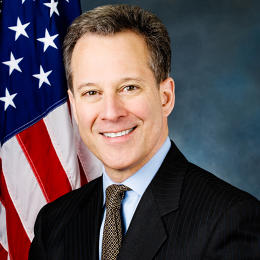
When New York attorney general Eric Schneiderman announced that his office would go after DFS, FanDuel executives were shocked by his hostility. “Daily fantasy sports is neither victimless nor harmless,” Schneiderman said in a November 2015 press release, “and it is clear that DraftKings and FanDuel are the leaders of a massive, multibillion-dollar scheme intended to evade the law and fleece sports fans across the country.”

New York attorney general Eric Schneiderman

Things had started to go wrong for the DFS sites that October, when The New York Times published a story about a Draft­Kings employee who allegedly used insider information to win $350,000 in a FanDuel tournament. Both companies denied wrongdoing (although they have since forbidden employees from playing any DFS games), but the revelation led to intense negative media coverage. Fans started to learn about how some of the sites’ most active users gamed the system by entering hundreds of matches (or more) per day with the help of software scripts to automate the betting process.

Cries for regulation were swift, and soon Schneiderman and other state attorneys general opened investigations into DFS. In November, Schneiderman essentially ordered FanDuel and DraftKings to shut down. (An appellate court later ruled that they could continue operating temporarily.) In the wake of the controversy, several major payments processors, including Citigroup and Bank of America, stopped accepting DFS–related transactions in New York state, and the industry now faces around 80 class-action lawsuits, ranging from claims of fraud to false advertising.

Eccles insists that FanDuel has been “twisted and mischaracterized” and that his company operates with integrity. FanDuel has a “good moral compass,” he says—nothing like the unscrupulous gambling ring you’ve read about in the news. “The game is an evolution of seasonal fantasy sports, which has been considered legal for 50 years,” he says. At the same time, he adds, “It shouldn’t be a nonregulated free-for-all. There is no multibillion-dollar unregulated industry; we needed to become regulated.”

Spending time with Eccles, it’s clear that he’s determined to remain disciplined and focused, whatever obstacles arise. “Nigel is not someone who panics,” says Owen O’Donnell, who worked closely with Eccles in the early days of HubDub and FanDuel. “A lot of entrepreneurs have emotional reactions, whereas Nigel has always been pragmatic, measured, and nonconfrontational. You’d never hear his team swearing or shouting.” Still, the company’s efforts to spin opinion can feel a tad contrived, especially when I’m scolded several times for using what CFO Matt King refers to as “the B-word”: betting. (In FanDuel’s world, users don’t bet; they “play.”)

Ultimately, FanDuel’s fate will be determined less by its internal culture than by the vagaries of state-level politics, as legislatures around the country begin to hash out what to allow. The challenges ahead are overwhelming, and they could end up crippling FanDuel. For Eccles, the strategy right now is just to keep going. King compares it to Matt Damon’s character in The Martian, an astronaut trying to make it home from Mars. “How do you survive?” King asks. “He’s like, ‘You solve one problem, and then you solve the next one, and then the next.’ That’s our approach. Because if you take a step back and look at the totality of all of your problems, you’re screwed.”


Since Schneiderman “declared war” on FanDuel, as Eccles puts it, the company has been racing to gain support in state capitols. The CEO says that it was “frightening” how Schneiderman could “wake up and reinterpret the law and decide [DFS is] illegal.” But the reality is murkier. UIGEA, written before the concept of DFS existed, did carve out an opening for fantasy sports at a federal level, but it doesn’t explicitly declare DFS to be legal—and it doesn’t trump state gambling laws.

In many states, the definition of gambling depends on whether a game is predominantly skill- or luck-based. This standard is vague. Is DFS a game of skill because players analyze stats to build the best lineups? Or a game of chance because the outcome of a tournament often depends on unpredictable events, such as wind blowing a field-goal kick wide of the goalposts or a starting quarterback getting injured? “Our laws make it explicitly clear that if there’s a material element of chance, even if skill is involved, it’s still gambling,” Schneiderman has said. The attorney general of Rhode Island, meanwhile, has said he believes that DFS is a mix of both chance and skill and is likely legal under state law.

FanDuel and DraftKings have enlisted armies of high-profile lawyers and lobbyists to push this latter view. The Fantasy Sports Trade Association, which is funded in part by the two DFS leaders, has hired at least 65 lobbying firms in 44 states and will reportedly spend around $10 million on the fight in 2016. NBA commissioner Adam Silver has thrown in his support, as has Dallas Mavericks owner Mark Cuban. (“It’s not a lottery. It’s not a card game. It’s a game of investigation, preparation, and intellect,” Cuban told me in an email.) “Over a three-year horizon, I’m confident that we will get to 45 states with laws that clarify the legality of fantasy sports,” Eccles says.

Currently, there are just two states that specifically legalize daily fantasy sports: Virginia and Indiana (Kansas has a law that legalizes fantasy sports more broadly). But FanDuel says it’s optimistic about regulation in more than 20 state legislatures, including California. Many bills include a set of baseline standards, such as prohibiting DFS company employees and their relatives from playing and upping the minimum age to 21 from 18 (Eccles supports these regulations). To lawmakers such as Indiana state senator Karen Tallian, though, the rapid push to legalize this new industry is distressing. She couldn’t believe that a DFS bill, authored by two novice lawmakers, rushed through the senate chamber without much resistance. “Half my colleagues were going, ‘Fantasy gaming? What’s that?’ ” Tallian recalls. “These companies are pushing legislation all over the country to say [DFS] is not gambling so they can automatically get rid of that hurdle. This is just wrong. We need to slow down and look at this harder.”

In many ways, this legislative approach resembles that of Airbnb and Uber, which continue to fight regulatory battles as they seek broader acceptance of their disruptive services. FanDuel has even tapped consultant Tusk Strategies, which previously advised Uber, to help raise awareness of the situation among consumers. But there’s a difference: Resistance to those companies is primarily coming from the industries being disrupted, whether it’s the entrenched taxi industry or the multibillion-dollar hotel business. With FanDuel, the sports industry is an enthusiastic supporter. Eccles says his plan is to work with legislators to “educate” them about his company, rather than “trying to steamroll into places like Uber.” But he does push back against some tougher regulation. For example, Eccles recoils at a proposal by the Massachusetts attorney general that would institute a $1,000 limit on deposits per month unless customers can verify to DFS operators that they can sustain higher losses. “You would never treat Amazon like that,” Eccles says. “People overspend on shopping, right? Amazon never has to prove that somebody can afford what they’re buying. It feels a bit overly paternalistic.”

Some critics have also called on the DFS sites to crack down on the high-volume players who enter hundreds of tournaments per day to win big payouts from less-savvy players. Banning this type of play sounds like common sense, but as Tom Griffiths, FanDuel’s chief product officer, explains, restricting these players would “reduce the size of the prize pools, which is something that people really like. It would also make us smaller as a business.” The company has tried to alleviate the situation with features such as “rookie contests,” which are only open to players who have entered fewer than 50 games. But ultimately, Eccles believes players should just be allowed to play. It all comes down to your “personal liberty,” a phrase he repeats three times in the course of 10 minutes during one of our interviews.


With 2.6 seconds left on the clock at the NBA All-Star Game, Steph Curry sails a half-court shot that kisses the net as it passes through the hoop—an astonishing display of his effortless stroke. The game ends, and Eccles and I make our way to the exit. The night’s festivities are just getting going; Ludacris and Lil Jon are hosting after-parties that will rage for hours to come. But Eccles is tired. He’s been on the road for a month, and he has to fly to San Francisco and New York for meetings before he can return to his family 3,000 miles away in Scotland. “In the early years, I’d be out until four in the morning,” he says. “Now I’m, like, done at 11 p.m.”

This is the closest you’re likely to come to hearing Eccles complain. Despite all the pressure and accusations of wrongdoing, the CEO remains outwardly unruffled. Still, Eccles’s cofounder and wife, Lesley, admits that the last year has been “so, so tough.” And FanDuel’s challenges continue to grow. Just three weeks after the All-Star Game, on March 4, the company announced that it would soon cease operations in Texas, in accordance with the state attorney general’s opinion that DFS is illegal. On March 21, FanDuel reached a settlement with New York’s attorney general to immediately stop operating paid contests in the state pending the outcome of litigation or the passage of legislation that directly regulates DFS. FanDuel will now no longer be able to collect entry fees from almost a quarter of the country’s population.

According to several sources, FanDuel has also had to scale back ambitions to develop products that go beyond its core DFS business, such as Zynga-esque mobile sports games. “They realized they didn’t have the time or money to focus on expansion,” says FanDuel’s former strategy VP Lee Milstein, who left in December when it became clear his role was no longer relevant. “[New products] became theoretical, like, ‘Yes, that sounds amazing, but we can’t do it right now.’ ” FanDuel has since laid off 55 employees.

But Eccles isn’t giving up. The company plans to revamp its national marketing campaign for the upcoming NFL season, focusing less on those giant cash prizes and more on how much fun it is to play DFS. FanDuel plans to further integrate sports analytics service NumberFire, which it acquired last summer, to provide users with premium data feeds to research and optimize their lineups. And Eccles and his team hope to talk Texas and New York lawmakers into introducing legislation that would legalize their business.

As fans drain out of the Air Canada Centre—many no doubt on their way home to obsessively prep for the next batch of DFS matches—Eccles chats about how much he loved watching so many superstars spar. But the truth is, he’s less a fan of sports giants than of underdogs, he says—players who quietly help their teams win without ever making the All-Star Game and struggling teams that attract die-hard fanatics who never give up, no matter how lost a season might seem.

It isn’t hard to see why. For Eccles and FanDuel, success won’t come with a gorgeous half-court swish in the final seconds. It’s going to be a slow, flying-elbow fight to push the ball into the paint and—if things end up going their way—through the basket. In order to succeed, Eccles believes, “you need a good dose of disappointment and kicks in the teeth. If you don’t have that, you don’t really appreciate when things are good.”

Read More