Press Enter / Return to begin your search.

How Wendy’s Is Making Ghost Peppers Safe For Middle America

If you’ve never had a ghost pepper before, be warned: They’re one of the world’s hottest peppers. Properly known as the bhut jolokia, the peppers are 107 to 417 times hotter than the jalapeño on the Scoville scale, which measures chili pepper heat. And they’re part of an emerging taste for spicy food in the United States that led Wendy’s to add them to their menu.

For the second year in a row, Wendy’s is adding ghost pepper-flavored items to their menu as part of a temporary promotion. Ghost Pepper Fries and a ghost pepper-ified Jalapeño Fresco Spicy Chicken Sandwich are now on the menu at the chain’s American restaurants; both items prominently feature a ghost pepper sauce that mixes small amounts of the ultra-hot pepper with a high amount of spicy food marketing.

The two dishes are intended to specifically target a specific and very loyal niche at Wendy’s: customers who love spicy fast food and patronize chains offering extra-spicy menu items, Lori Estrada, the chain’s senior vice president of R&D, tells Fast Company.

“It’s not necessarily a product that would rise to the top in traditional screening tools, but a lot of customers told us they want chicken in a spicier format,” Estrada added. Kurt Kane, the company’s chief concept and marketing officer, noted that the ghost pepper-ified chicken sandwich in particular didn’t do as well as other items in test marketing. But he adds, “As people dug into the data behind this one, a lot of consumers said that they made a special trip to Wendy’s for this product.”

Yet there’s a secret behind the ghost pepper chicken and fries: They don’t contain that much ghost pepper.

Both dishes rely on a sour cream-based hot pepper sauce. Like most fast food condiments, they’re a wonder of chemistry and culinary science. The 20 ingredients include a variety of natural and artificial flavoring agents and preservatives. But of the 20 ingredients, ghost peppers are only No. 16 on the ingredient list. Jalapeño, by comparison, is No. 4 on the list.

So why ghost peppers? Wendy’s has to walk a difficult tightrope act in selling the menu items. Spicy foods are a reliable money generator for Wendy’s; their menu also boasts non-ghost pepper spicy chicken sandwiches, wraps, and nuggets. According to Estrada, “Consumer tastes evolve over time, and they get more used to spice. There is more [consumer] diversity as well, and tolerance for spice has changed over time. . . . We looked at our current product and looked for ways to ramp it up to a spicier level.”

While Wendy’s patrons might demand spicier menu items, it’s also a very mainstream fast food chain. Specialty establishments such as Atlanta’s The Vortex and Iowa’s Xtreme Smokehouse offer ultra-spicy burgers that provide an intense (some would say masochistic) eating experience. Wendy’s is a multinational corporation that wants to ensure diners come back and spend more money.

That means offering a sauce that is a jalapeño-ghost pepper mix instead of a traditional ghost pepper hot sauce. And the chicken sandwich features different layers of heat, which offer creaminess and cooling sensations to temper the spice. Alongside the ghost pepper/sour cream sauce, there’s a jalapeño cheddar bun, diced jalapeños, and Colby pepperjack cheese. “We played with other pepperjack cheeses, but the Colby gives some more creaminess. The ghost pepper sauce has sour cream as well—it’s a counterpoint for cooling,” says Estrada.

The ghost pepper fries, meanwhile, weren’t part of Wendy’s original plans for extra-spicy food. Kane says that the fries were the creation of kitchen staff at Wendy’s restaurants participating in original trials who came up with the dish—which covers french fries in the ghost pepper sauce, cheddar cheese sauce, and jalapeños—by improvising with ingredients from the chicken sandwich.

For Wendy’s, the two dishes performed well enough to reappear on the restaurant’s menu. They’ve also inspired an atypical fandom for fast food dishes that includes YouTube reviews and tribute videos and social media postings. They also fit well into an industry trend of increasingly spicier items aimed at a niche audience of repeat customers: Burger King recently introduced a super-spicy Angriest Whopper, chain Jack in the Box has sold a similarly ghost pepper-ified Blazin’ Hot Chicken Sandwich, and fried chicken chain Popeyes’ test marketed ghost pepper wings.

The ghost pepper chicken sandwich and french fries are now on sale at Wendy’s as a limited-time offering. An end date for the campaign hasn’t been announced; Kane expects they will be available at restaurants for the next four to six weeks.

Read More

“Containment” Showrunner Julie Plec Looks Back On Her Long Journey To Writing

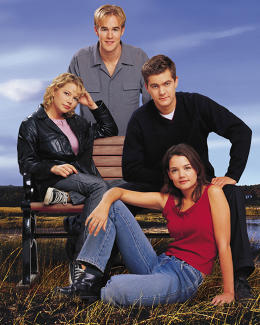
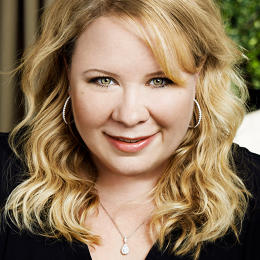
While many writers have a fervent—and sometimes even delusional—belief in their abilities, Julie Plec, the writer and showrunner best known for the CW’s gothic romance The Vampire Diaries (which she cocreated with writer Kevin Williamson) and its spin-off The Originals, spent years believing that she wasn’t a writer.

She traces this long-held conviction back to a class she took when she was a student at Northwestern University. “I had taken a playwriting class in college that another friend of mine, Greg Berlanti [currently the executive producer of The Flash, Arrow, and Supergirl], had taken, and it had cemented his love for the craft and made him certain that this was something that he could do and that this was his passion. I had the opposite experience,” Plec says. “I hated it. I was terrible at it. It was a miserable experience, and I came out of that being like, well, at least I know I’m not a writer.”

[youtube https://www.youtube.com/watch?v=qE983cTD4Mg?rel=1&autoplay=0]

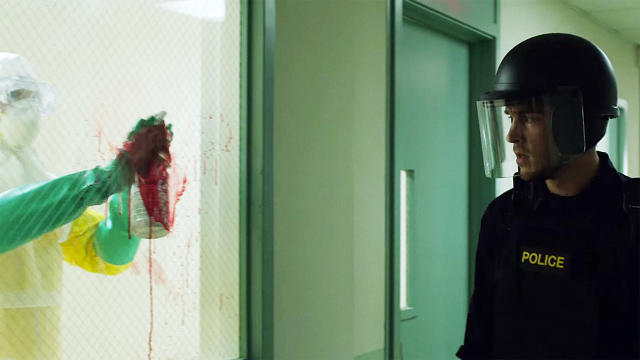
It’s actually hard to believe Plec ever felt this way because she is so successful and prolific. She has written several episodes of The Vampire Diaries and The Originals, and more recently scripted the pilot for and several episodes of the new limited series Containment. Based on the Belgian series Cordon about a mysterious viral outbreak, the show premieres on the CW tonight, and Plec is also its showrunner.

Here, Plec looks back on the evolution of her career and how she finally broke free of her “I’m not a writer” mindset.

Julie Plec

The Early Days In Hollywood

Plec, who grew up in a suburb of Chicago, didn’t think she was cut out to be a writer in college, but she did want to find a place in the entertainment industry. Landing a gig as an assistant to horror master Wes Craven set her on that path. It was only her second job in the entertainment business, and she loved it. “There were stacks and stacks of horror scripts that needed to be read. They put a stack on my desk and asked me to start reading, and I did. That’s what the bulk of my job was in that first six months I worked for him—just going through material,” she recalls.

Plec soon realized she had a knack for reading a script and writing a fairly thoughtful analysis and decided she would make a career for herself in development. “That was an epiphany I had early on. I thought, ‘Finally, something that’s my fit. That’s what I should be doing,'” she says.

After two years, Plec was promoted from assistant to Craven’s director of development, a job she held for another two years. “They were so good to me. They really saw the value of what I was contributing. We were very close and tight-knit as a group. Marianne Maddalena, Wes’s partner, really took me under her wing and made sure that I got credit where credit was due,” Plec says. “She was a woman perfectly happy to shower praise and draw attention to the skills of another woman, which is something that I learned early on, and I really appreciate.”

Scream, 1996Photo: Dimension Films

A Dip Into Writing Via Dawson’s Creek

After four years working at Craven’s company, Plec left to work for Kevin Williamson. “I met Kevin because one of the scripts that I read when I was reading all of Wes’s material early on was Scary Movie, which was the original title of Scream. It had come in as a spec that his current director of development, Lisa Harrison, had brought in, and I read it as she was reading it. We were both freaking out because we loved it so much and were desperate for Wes to do it,” she recalls.

Plec really got to know Williamson during the making of Scream 2, “I was, basically, the development executive for Wes during that movie, and that’s how we got our creative relationship really solid. Kevin got an opportunity to have his own deal and his own company, and he asked me to come run it with him,” Plec says.

Plec brought some talented writers into the fold, hiring Berlanti to write for Dawson’s Creek and helping to launch his career by doing so, and giving Damon Lindelof, who would go on to Lost and The Leftovers, a job writing for Wasteland.

It was while working with Williamson that Plec started writing. “We were just always behind. Everything that we ever did, we were late. He was wildly busy, so any time that we were trying to get something done, I would just lend a hand. I would pitch in. I would try to write the framework of something so I could hand it over to him so that he could fix it, flesh it out. When you’re that busy, you’re an assembly line, and you have to get it done,” Plec says. “What I was doing was trying to write like him so that he could then just take it and make it better.”

At that point, Plec still didn’t see herself as a writer but rather someone who was emulating Williamson’s style. She thought, “He’s doing the writing. I’m just helping.”

After two years working with Williamson, there were at least a dozen episodes of Dawson’s Creek that had aired on television and included some dialogue Plec had written. “If you write a good line, you write a good line, and the best line wins in television,” she notes. “It doesn’t matter if you’re the guy who gets the coffee or if you’re the showrunner—best line wins. That’s the beauty of television collaboration.”

Dawson’s Creek, 1998Photo: Sony Pictures Television, The WB

The Brewing Epiphany

If you think that hearing the witty teens on Dawson’s Creek speaking her lines made Plec realize she was meant to write, well, you would be wrong.

After she and Williamson parted ways, “I had taken another job that I didn’t particularly like. Then probably a year or two had passed without me holding a steady executive job, and I didn’t want one, so I wasn’t looking,” Plec says. “I thought, ‘Oh, I’ll be an independent producer. Oh, I’ll be a manager.’ I was going through all those things in my head and one night, late at night, I was having what I would now describe as probably a panic attack because there were so many unknowns. An almost literal voice came into my head telling me, ‘You need to write.’ I don’t pray. I’m not a deeply religious person. If I were a deeply religious person, I would say that I got a message from God.”

And then she began writing . . . uh, no.

“That was really the kind of breakthrough moment, which then translated into, hilariously, me producing a movie for the next two years,” Plec says.

She Finally Makes A Move

We are getting to the point in Plec’s career story where she takes the leap.

Plec accepted a gig as a non-writing producer on the ABC Family teen drama series Kyle XY, thinking, “If I can get the show on the air, then maybe they’ll give me the opportunity to write an episode.”

And that’s what happened. “The EP, David Himelfarb, just looked at me one day and said, ‘You should write an episode because you know the show better than anybody,'” Plec says.

Excited for the opportunity, Plec wrote a script for the show’s fourth episode, and it was well received. “The first words out of the network executive’s mouth were, ‘We always knew you had this in you. Now, we are so happy to be proven right.’ It was a thrill,” she says.

Did she finally believe she was a writer at that point? Yes. “That was the validation,” she confirms.

Why Did It Take So Long?

While Plec was slow to see the obvious, her colleagues through the years encouraged her to own being a writer. “I was developing with my friend Gren Wells. She’s a screenwriter, and I’d make notes in the margins, and I’d pitch dialogue, and I’d pitch structure. She would say to me all the time, ‘You know you’re a writer.’ I’d like like, ‘No, trust me, I’m not. I’m really not.’ “

Berlanti also pointed it out to her. “Greg would say that to me all the time because I was constantly developing with him. He and I were actually writing a pilot together at one point, which is funny because I thought he was so generous by wanting to share writing credit with me when I clearly wasn’t a writer,” Plec says.

Looking back and analyzing why she took so long to embrace her talent, Plec chalks it up to her practical nature as opposed to a crippling lack of confidence.

“As a kid, I was always decent at everything that I tried. Whether it be sports or theater or school, I excelled in certain areas more than others, but I had a natural ability—I could pick up a tennis racquet and hit the ball. But when I got to a place in any level of sport or club or school where I felt like I wasn’t good enough, I would move on to something else,” she explains, and that’s an approach she continued into adulthood.

“In doing that, I never quite latched onto the thing that I loved until it all solidified 10 to 15 years into my career,” she muses.

No Regrets

Looking back, Plec thinks her unusual path to writing for television—coming at it with the experience she got in development and producing—worked to her advantage. “Here’s the thing: I had the relative talent, I suppose,” she reflects. “Obviously, people liked the things that I wrote, and they made it through, and they got filmed. But had I at 26 said, ‘Hey, great news, everybody, I’m a writer!’ and tried to explore that career, I think it would have been a disaster. I don’t think I knew shit, you know? I think that 10 years of development and creative producing and working side by side with Kevin and with Greg and reading just from an outlier point of view—I had read so many scripts over those years that just by osmosis, I must have learned something.”

Read More

In Milan, A Tantalizing Glimpse At The Future Of Your Living Room

Gorgeous furniture is only half of Milan Design Week, the largest, most prestigious design fair of the year. The other half? Head-scratching conceptual projects and design experiments that push the field into the future. Think about interior designs that morph over time, stools made from 3-D printing scraps, and even a petting zoo that stabilizes your mood. We scoured the city to find the best, most cutting-edge designs. Think of this as a guide to the living room of tomorrow.

Studio Ilio Stools

Using waste material from 3-D printing, Studio Ilio made 12 stools in a series called Hot Wire Extensions. The designers formed a shape using wires, then set it into a mold filled with nylon powder taken from companies that use selective laser sintering. Hooking the wires up to an electrical current makes them hot, and they melt the material around them, creating the stools’ final form.

The Living Interior by Belén

Designers Brecht Duijf and Lenneke Langenhuijsen of the Amsterdam-based studio Belén are interested in the material aspects of a space and grapple with how color and texture can evolve over time. Through their experimental materials, they want to give rooms a character of their own and a “soul.” The big-picture idea? If an interior morphs and changes on its own, it can better stand the test of time since people never get bored with it.

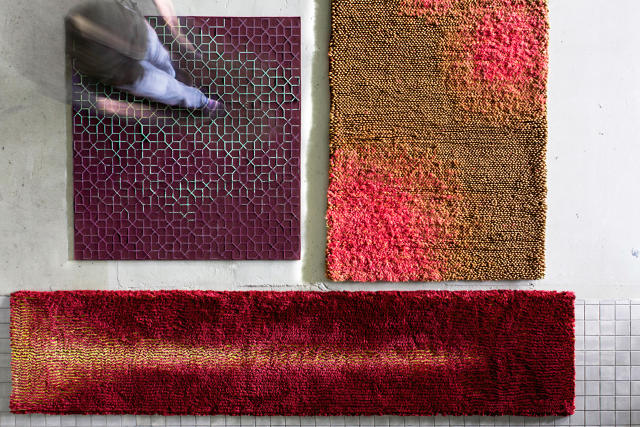
Belén uses vegetable-based dyes, which all react to UV radiation differently since some colors are naturally more stable than others. The Laying bag—made from 3-D knitted fabric—is dyed pale pink. The surface will fade to yellow over time while the creases will remain the same hue, creating an ombré effect. A similar treatment takes place with the plush Fluffed rug whose long, wool tufts remain pink while the surface fades. As people walk across the carpet and the fibers move around, the visible color changes.

For the living textures wall, Belén worked with Cottonmix—a manufacturer of cotton-based acoustical spray-foam insulation—and the paint company Riga to create textured walls that “change” color based on how light and shadow play with the surface.

Ripening Rugs by Adrianus Kundert

Dutch designer Adrianus Kundert wondered why products loose value over time and why we apply coating after coating to keep items looking new. His research involves looking at how “gradual erosion” can enhance an item and how age can amp up the beauty of a design. The Ripening rugs are woven with special yarns that fray to reveal different layers. For the follow-up project Trans-Saddles, Kundert uses soft lacquers that crack underneath a hard plastic shell.

Touch Base by Design Academy Eindhoven

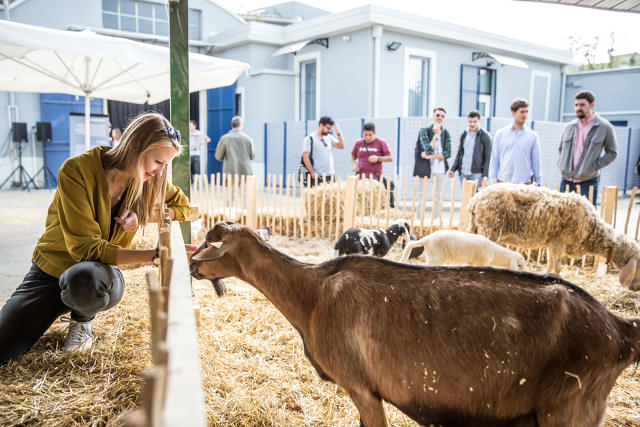
Building on its fall 2015 Dutch Design Week exhibition, the Design Academy Eindhoven explored tactility, a sense that curators Ilse Crawford and Thomas Widdershoven, also the academy’s creative director, believe is “too often numbed, neglected, vilified, and sexualized.” In addition to showing garments made from human hair and anxiety-mitigating rugs, they went all out and built a petting zoo with chickens, roosters, lambs, and sheep.

But it wasn’t all folly. The students built a pulse sensor that visitors strap around their finger before petting the animals. The concept highlights an observation that while petting animals can boost our mood, we typically only interact with them on YouTube. After you’re done playing with the animals, the machine prints out a graph of your heart rate. (Unfortunately, it didn’t work for me.)

Body Scapes by Jessica Smarsh

[vimeo 161897475 w=604 h=340]

Part performance piece, part digital experiment, part cozy blanket, Body Scapes is designer Jessica Smarsh’s investigation into rituals. For 20 days, she took a walk and recorded her emotional state before and after using a custom software system that would translate bodily movement into a graphic pattern. Smarsh then wove two-sided blankets using the patterns—before the walk on one side and after the walk on the other—as a sort of infographic embodying her state of mind.

Iwan Pol at Envisions

Envisions, a group exhibition, focused on the materials research and experimentation that informed the products of nine different practitioners and studios. Instead of showing the completed work, the installation aimed to put concepts first. Iwan Pol is interested in concrete and its reputation for coldness and austerity. In an aptly named series called Happy Concrete, he played with pigments and texture as a way to change the way the ubiquitous building material is perceived.

Agar Packaging by Amam

Kosuke Araki, Noriaki Maetani, and Akira Muraoka—members of the Japanese design studio Amam—won top honors at the Lexus Design Awards for bio-based packaging called Agar Plasticity. (Materials expert Max Lamb served as their mentor on the project.) Derived from seaweed, the packaging is an environmentally substitute for plastic and can take on a variety of textures and thicknesses.

Trace Clock

Also exhibited at the Lexus Design Awards, the Trace clock by the London-based firm Studio Ayaskan uses lasers and the same UV-sensitive material in Transitions eyeglasses to tell time. Twin sisters and Royal College of Art grads Bike and Begum Ayaskan were inspired by the notion that everything we do in the present impacts the future and felt that, culturally, we’re becoming disconnected with time.

To build the clock, Studio Ayaskan mixed a photochromic material (something that changes color when exposed to light) with mineral oil. Two lasers shine UV light—whose wavelength can be calibrated for different colors—for the hour and second hand. As the second hand cycles around the clock, it leaves a trail of color that fades after about 30 seconds so you become more aware of its path.

Out of the Blue by Studiopepe

The Milan-based firm Studiopepe took a page from history for its exploration of color called Out of the Blue. The sculpture series riffs on cyanotypes, an early photographic process developed in the mid-1800s. The designers brushed ceramic sculptures with a cyanotype solution and exposed them to sunlight. The color contrasts that emerged on the pieces’ surface are based on the lighting condition at the time.

Bobina Chair by Studio Nito

Inspired by thread wrapping around bobbins, designers Nil Atalay and Tobias Juretzek of the newly formed Studio Nito made a furniture series using cotton yarns reinforced with a bio-based resin.

Raw Edges Herringbones

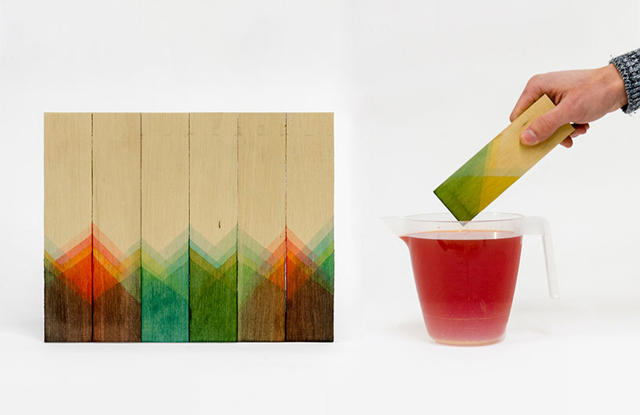
Raw Edges created the prismatic herringbone pattern on its latest furniture collection by repeatedly dipping wood slats into different dyes—a technique commonly used for textiles. Depending on which colors are layered on top of one another, they meld to create different hues while allowing the wood grain to show through.

The Light by Studio ByColor

Washi paper is a traditional material for lanterns (it’s what Isamu Noguchi used for his famous Akari lamps) and designer Kaori Akiyama of Studio ByColor mixes it with Trixial, a moldable textile made from polyester to create table lights.

Patience by WePlus

[vimeo 161733103 w=604 h=340]

A very literal take on a clock face, Patience by WePlus uses facial expressions to tell time. One eye represents hours, the other represents minutes, and the mouth relays seconds. It’s illegible and bizarre and mesmerizing.

The Meat Project and the Art of Deception by Atelier Monté

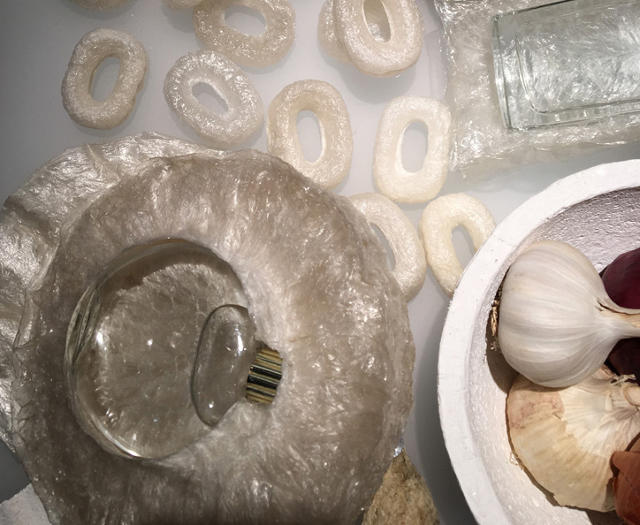
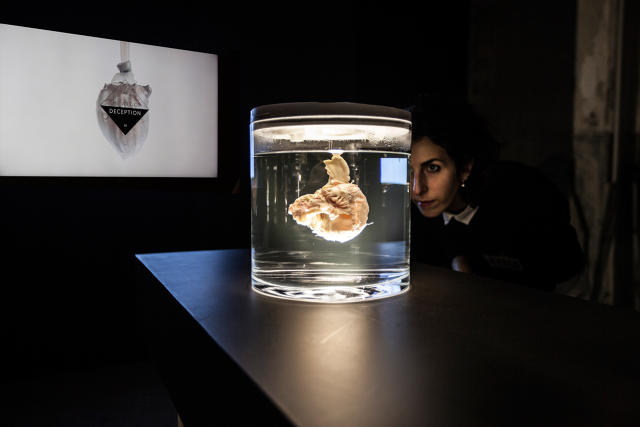
To raise awareness about supermarket food waste, designer Isaac Monté collected expired meat and “decellularized” it using a process used in tissue regeneration research. The process turns the meat into a white, rubbery material that can be molded into different shapes. Monté molded it into pendant lights in the form of Escherichia, a bacteria that causes meat to spoil. He used the same process in a series called the Art of Deception, which strips pig hearts of their cells, leaving the only the structure. Monté then turned them into what he calls “elegant vessels.” Scientists already use a similar technique in research for organ transplantation, and Monté wanted to show how organs can become the next design canvas and how far we can engineer the human body.

Read More

In Many Parts Of The World, Fighting For The Environment Can Be A Deadly Profession

Máxima Acuña, winner of the 2016 Goldman Environmental Prize—a global award for grassroots environmental activism—is constantly looking over her shoulder.

She fears for her life often, a lot like Berta Cáceres, a winner of last year’s Goldman Prize who was shot and killed in her home in Honduras in early March.

“Of course it is very worrisome, what happened with my comrade Berta. These companies are very powerful, I know that the same thing could happen to me,” Acuña tells Co.Exist through a translator.

Acuña lives in the remote northern highlands of Peru, not Honduras. The company she is battling is one of the world’s largest gold mining companies, whereas Cáceres had been fighting one of Latin America’s largest hydroelectric dam projects that would destroy the lands of the indigenous Lenca people.

But nevertheless both had faced similar situations. She and Cáceres are impoverished indigenous women in remote places, working to defend their land against the interests of corporate power in places where the rule of law is weak and there is little, if any, accountability for violence. After Cáceres’s death (her colleague Nelson Garcia was also murdered a few days later), those working closely with her were sadly not at all surprised. By that point, Cáceres had faced credible death threats and harassment for many years.

According to the organization Global Witness, environmental activists and “land defenders” are facing increasing dangers around the world. In 2014, the group found that at least 116 were murdered in 17 countries, almost double the number of journalists killed and an increase of 20% since 2013. The large majority of documented death are overall much higher than 10 years ago. The most dangerous region by far is Latin America, followed by Southeast Asia.

“It’s a worrying trend and a very significant trend,” says Adam Shapiro of Front Line Defenders, a group that provides security assistance to grassroots activists.

Environmental activists, and particularly indigenous activists, are often at particular risk of violence because they often live in remote regions, rather than big cities; they aren’t on Twitter to protest their treatment. And risks are increasing as the demand for natural resources grows and companies exhaust existing deposits. In Latin America particularly, there are powerful elites increasingly coming into conflict with disempowered groups in resource-rich areas where corruption runs rampant.

“The kind of opponent that environmentalists are facing is in many ways far more powerful than a government or a court,” Shapiro says.

Profiles in Courage

Two out of five of this year’s Goldman Prize winners illustrate these risks. Acuña, a grandmother, lives in the remote northern Peruvian highlands on an off-grid subsistence farm, which she and her husband purchased in 1994.

Her anonymous pastoral life changed in 2011, when representatives from mining companies knocked on her door and demanded she abandon her property to make way for a $5 billion mining and lake drainage project in the Cajamarca region. The project would turn several lakes into waste storage pits and wreak havoc on the ecosystem. Unlike some of her neighbors, she has refused to leave, and her case became known throughout Peru as others have protested the mine’s development. Her life has been a living hell ever since.

Despite a court ruling in her favor that she owned her land in 2014, she and anyone visiting her house are under constant surveillance by private security forces working for the mine developers, Colorado-based Newmont and the Peru company Buenaventura. They have killed her dogs, stolen her sheep, and destroyed her potato crops right before a recent harvest. Her family has been beaten.

“The aggression that we’ve been facing from these companies—they destroy whatever is in their way to destroy,” Acuña says. “Now, what’s happened too is that the company has put up these wire fences around the land, so they have us in their corrals—as if we’re in prison there—and so we don’t feel safe.”

Acuña’s situation is so precarious that the Inter-American Commission on Human Rights has called on Peru’s government to take precautionary measures to protect her safety, a relatively rare step it also took in Cáceres’s case. Very recently, says Acuña, the government promised to send police patrols to visit her property on occasion, but she feels this is far from enough—and far less than the constant police presence that protects mining interests.

Despite the danger, Acuña vows not to be intimidated and so does Leng Ouch, another 2016 prize winner from Cambodia. In a country where there is risk in speaking out, he has worked undercover, posing as a laborer, tourist, and driver, to catch illegal logging activities while the government looked the other way. In 2012, his colleague was killed and there have been other deaths—of a journalist and forest protectors—since. Now that everyone knows his face and his work has been on TV, Ouch must take measures to protect himself and his family. But he has also had success. In 2014, the government canceled 23 land concessions on 220,000 acres.

Both Acuña and Ouch hope the Goldman Prize and the international stage it brings can improve their security situations, and the prize works with its winners to help ensure that is the case. But nothing is certain, and this publicity wasn’t enough for Cáceres. “It is clearly not a bulletproof shield,” says David Gordon, executive director of the prize.

Justice for Cáceres?

Goldman hopes that Cáceres’s murder is a wakeup call. If there can’t be accountability in her high-profile case that has received international media coverage and has led to violent clashes in Honduras, then there is little hope for the activists who don’t even get a local news story when they are killed.

Groups are focusing on trying to pressure the Honduran government to allow an independent investigation by the Inter-American Commission on Human Rights. The government’s own investigation—while more than it does in most cases—has been highly suspect so far. There are also some calls for the United States to suspend some or all of its aid to the country.

Putting pressure on investors or foreign companies involved in massive projects that trample on human rights is also important. Several other indigenous activists working to block the Agua Zarca dam had been killed since 2013, but only after Cáceres’s high-profile death did two European investors in the project—the Dutch Financial Development Company and Finnfund—express their shock at the violence and back out of their involvement.

“We so often see that these land conflicts that are fueling threats to the environmentalists are being driven by foreign investors and foreign companies that are frankly taking advantage of weak judicial systems,” says Gordon.

Global Witness senior campaigner Billy Kyte says that foreign investors should be pressured to do real due diligence on projects, rather than just accept a company’s claim that local communities were “consulted.” “Oftentimes the first time communities hear about these projects is when they hear a chainsaw in their backyard.”

Read More

How To Plant An Urban Garden: A Step-By-Step Tutorial

As winter recedes and we dig our slightly lighter clothes out from the back of our closets, our thoughts turn to vegetables and flowers—even if, for city dwellers, our growing spaces are limited to balconies, rooftops, fire escapes, sunny windowsills, and tiny backyards. But these meager spaces shouldn’t deter us; it’s surprisingly easy (and fun!) to grow all kinds of pretty and delicious plants even without a lush suburban yard.

Maureen O’Brien, a community field manager at the Brooklyn Botanic Garden, walked us through some of the many easy ways to plant a garden, even in a small space. The key limiting factor in what you can plant, says O’Brien, is sun. She divides the possibilities for small-space gardens into three categories: shady, part-sun, and sunny. Full sun is going to be unusual in an urban environment: trees, other buildings, fences, and all kinds of other obstacles are likely to block sunlight for at least part of the day. Partial sun, generally, is what we urbanites might think of as “extremely sunny,” consisting of unblocked sun for around four to six hours per day. Anything under four hours is considered shady—if you’re looking at under two hours a day, you’ll be restricted to plants that need basically no sun at all.

Photo: Unsplash user Thomas Verbruggen

Steal My Sunshine

If your growing space has a mere few hours of sun per day—this might include something like a sunny window—you still have options.

First, you’ll need a container. You might be surprised that those expensive glazed or terracotta pots, while beautiful, offer absolutely no advantage to growing plants besides looking nicer than, say, a plastic bucket. “Plastic quart takeout containers would work fine for herbs; or you can get an expensive glazed pot, and that works fine, too,” says O’Brien. We love Home Depot’s five-gallon “Homer” bucket ($3.42 each) for big stuff, and its “Norcal” terracotta pots ($1.32 each) for little stuff. If you want something a bit more stylish, Crate & Barrel make really beautiful two-tone planters ($6.95-$49.95). There’s always Ikea, which typically has a solid selection of inexpensive planters, or you can buy plain boards ($7.98) and make them yourself:

[youtube https://www.youtube.com/watch?v=UUOsUNtXK7k?rel=1&autoplay=0]

The key is to make sure the container has a hole in it, preferably around the sides, about an inch up from the bottom, to provide proper drainage. You’re a garden noob and may accidentally overwater, so drain holes let any excess water escape without rotting the roots. You could insert a little piece of screen or a bit of fabric to block soil from coming out of the bottom, but you’ll still want to place a container like this on a catch saucer in case excess water comes out. If you’re doing a lot of gardening, you could opt for some weed-blocker fabric, which is effective and cheap at scale ($18 for 50 yards). An old T-shirt, honestly, will work as well. (I’ve typically just done without and accepted that a little soil will come out of the bottom with excess water.)

Be careful of window boxes that hang from a window ledge: for one thing, they can be dangerous if not properly attached, and for another, it’s trickier to plant a bunch of different plants in a single container. They can fight with each other for water or nutrients, and if they have different water needs, you’ll end up over- or underwatering something. If you do go for a window box, this one from WindowBox.com ($76.97) allows you to place individual pots in the window box holder.

You’ll need soil, too; in most urban environments, soil can be polluted and generally rocky, sandy, and depleted of nutrients. Better to buy some potting soil. For beginners, Miracle Gro or other boosted-nutrient soils work just fine, but for intermediate gardeners, O’Brien recommends going organic. “When you use Miracle Gro or things like that, it’s a big shock of nitrogen all at once, and it doesn’t stay in the soil,” she says. The nitrogen can soak into groundwater, which isn’t good, but it also has weird effects on the plant: O’Brien says she’s noticed that too much nitrogen can result in more succulent leaves, which can attract pests, as well as fewer fruits. Black Gold ($16.00 for four quarts) makes some good organic soil, or if you want to go the non-organic route, just snag some Miracle Gro. It’s available on Amazon ($7.49 for 1 cubic foot), but you’ll find more options if you go to a hardware store or a Home Depot or Lowe’s. (I’ve had good luck with Miracle Gro’s organic line, Nature’s Care. But don’t overthink it. Just buy some potting soil.)

You’ll want to grab some fertilizer, too. O’Brien recommends either a liquid fish emulsion or the granular version. Jobe’s is the go-to brand for organic fertilizers, and is very cheap ($8.24 for four pounds, easily enough for a couple of seasons). I’ve used a liquid fish-based fertilizer called “Neptune’s Harvest” for years, primarily because it has an amusing label. Exactly what sort of fertilizer you should use actually varies by plant, soil type, and pH levels, but for starting out, just follow the directions and err on the side of underfertilizing.

So what can you grow in a difficult, shady spot? Edibles can be tricky, but a few herbs will grow happily without much sun. Mint is a great option, as are chives. They grow without much effort on your part and are hearty enough to withstand your mistakes. For non-edible options, O’Brien recommends “amaryllis or other bulbs, something where the energy’s already in the bulb.” Amaryllis bulbs (various prices, but don’t spend more than about $12)—produce absolutely stunning gigantic pink-and-white flowers with minimal effort. Ferns and many other houseplants are also pretty shade tolerant. You can buy some of these online easily; Amazon sells a rubber tree ($18-ish) that’ll arrive already planted and will eventually grow to six feet or taller. There are also lots of plant starters available inexpensively on eBay.

Beginners will want to go with seedlings instead of seeds. “Most seed packets have enough seeds to grow a 100-foot row of plants,” says O’Brien, and you certainly don’t need that. And some plants are tricky to grow from seed: “Parsley takes, like, three weeks to germinate,” she says. Don’t bother: Grab some seedlings from a local garden store or farmer’s market.

Photo: Unsplash user Jeff Sheldon

I’ve Got A Pocketful Of Sunshine (And Literally No More)

So you’ve got a little more sunshine than just a window—perhaps a deck or a south-facing window. Now you’ve got some options. First of all, go bigger: The size of your container will heavily affect the size of your final plant. Always go bigger than you think you need, and never overcrowd plants. Those gigantic five-gallon containers from Home Depot are good for, believe it or not, a single tomato plant or chili pepper plant. Don’t try to put in more; the plants will fight each other rather than grow tall and strong.

For intermediate gardeners, you can make a pretty amazing drainage system out of those buckets. Fill them with gravel ($11.69 on Amazon) up to a couple inches from the bottom of the bucket, then lay a layer of fabric (weed blocker is good, but honestly cotton will work fine) over top of that, then fill up the bucket the rest of the way with soil. This strategy gives you a much more regulated drainage system and will help your soil resist mold and sitting water.

Be careful if you’re planting multiple plants together; look at the tags to make sure they have the same requirements in terms of sunlight and water. Some plants naturally work together; “If it was an herb box, and you had parsley, basil, mint, and cilantro? Those are all kind of similar, they like a lot of water and would do best under full sun,” says O’Brien. But others, like sage, thyme, and oregano, need less water and less sun, and wouldn’t do as well under the same conditions.

Part-sun environments really open up what you can grow. Greens are incredibly easy, and for intermediate gardeners are a great way to play around with seeds. Lettuces, arugula, and chard are all super simple to grow, and germinate quickly.

Beginners and intermediates alike can opt, finally, for some non-leaf edibles as well. Tomatoes are easy to grow, but be careful about what kind you choose: O’Brien recommends cherry or grape tomatoes, which give harvests throughout the summer and can handle less sunlight and less space a lot more readily than, say, a beefsteak. Chili peppers are also incredibly easy to grow. If you’re starting from seed, O’Brien recommends seeds from Renee’s Garden, which you can find for about $3.00 per packet. From seedlings? Just head to your farmers’ market or hardware store.

With part sun, you’ll also probably encounter pests. Even in an urban environment, there are plenty of bugs (and even squirrels and pigeons) that are just as eager as you are to chomp down on some fresh local produce. Addressing bugs doesn’t have to be complicated: A simple solution of a tablespoon or two of dish soap to a quart of water in a spray bottle and squirted onto leaves and stems will discourage most bugs.

As for watering, again you can go as simple or as complicated as you want. The only real rule is to not over- or underwater, and to water directly into the soil where the stem emerges. Don’t ever water the leaves—they can get moldy and die—although certain plants can enjoy a nice misting of water on their leaves. (Again, refer to the seed packet or tag.)

Black Whole Sun

You’ve got rooftop access or a sunny backyard, so the sky’s the limit now—or, rather, your available space is the limit. A key mistake that many early gardeners make is picking the wrong kind of crop for a small space. Root vegetables are fun—”It’s really something to pull a carrot out of the ground,” says O’Brien—but because you’re eating the root of the plant, you only get one harvest per year, which makes it not a good use of space.

Ditto to gigantic plants like pumpkin, butternut squash, and watermelon. They’ll grow, but not all that well; these plants tend to want to cover the entire ground, and don’t play nice with other crops. And forget corn: Like carrots, it’s really fun, but the amount of space you need to grow even a meal’s worth of corn is probably more than you have in total.

Instead, opt for smaller fruits and vegetables: tomatoes and chili peppers, sure, but also zucchini, eggplant, cucumbers, and beans. Follow the directions on the package for these: Some, like cucumbers and beans, are climbers. Intermediate urban farmers can use an extremely old Native American technique for planting multiple items at once: You can stake or trellis your climbers, then grow ground-covering plants underneath them, like greens or herbs. You get double the crop in the same amount of space. You can get a cheapie wooden trellis for about $18.00, or you can go for beautiful elaborate wrought-iron trellises like this one ($387, which would be, frankly, insane), but they’ll work about the same. (Trellises are a great opportunity for a DIY project.)

With full sun, you might want to investigate a raised planter instead of using containers. This is a bit more effort, but could be worth it: You give your plants a little more room to stretch their roots and grow bigger and stronger. O’Brien recommends the “square foot gardening” system, which blocks off a raised bed into individual sectors to ensure plants grow unimpeded by others in a raised bed. And you can buy the boxes or other setups for that system already put together, or you can opt for a simpler wooden one ($69.99).

If you have a more elaborate raised bed garden, it’s worth it to figure out some kind of automatic watering system. That’ll allow you to leave for a day or a week and not worry about all your hard work going to waste, and will make sure your plants are happy. There are plenty of options, ranging from low-tech drip systems to smartphone-controlled Wi-Fi-enabled gadgets; this is a good guide to get you started.

Photo: Unsplash user Sergee Bee

The Best Gardening Gadgets

It’s likely you’ve read our dead-simple advice above and thought one of two things: Doesn’t everyone know this already? or Isn’t there an Uber for plants? To your first thought I’d reply (in this scenario, I’m a telepath): You’d be surprised. I’ve helped several of my New York City-based friends learn to grow plants over the years, and sometimes even just the basics of watering and draining have been shockingly novel to them. Not everyone actually knows how trees grow in Brooklyn.

As for automation, there is no shortage of off-the-shelf solutions to help you grow herbs and flowers. Some of them are even pretty good! But they’re certainly not as inexpensive as a DIY solution, and many of them won’t present you with the opportunity to learn the basics of gardening that will let you advance to trickier varieties of plants. Still, any method that gets you into the joys of having fresh greens at hand is a win.

Gardening gadgets can be roughly split into two categories: Monitoring solutions that keep track of soil dryness or nutrient balance, and all-in-one growing systems that typically forgo soil for hydroponic, water-based gardening.

Out of all of the monitoring gadgets—the Parrot Flower Power ($55); the Oso PlantLink ($45); the Spruce Irrigation system ($250+)—there are only a couple I’d actually recommend to the casual apartment gardener: the Chirp! water sensor from Adafruit ($16, with battery), which is a simple stick that sits in a pot and makes a little buzzing noise when things get too dry; or the Dr. Meter hydrometer ($16 for two), a clever little analog device that doesn’t even need batteries to operate. Both are highly rated (and regarded) and do the only thing you really need, which is to give you a second opinion about when it’s time to water. And since it’s likely that you’ll be watering all your plants at once, using one monitor in a single pot should be reminder enough that your plants need a little sip. (Bigger pots and bigger plants will go through water at different rates, but you can always just move the monitors to double-check what your finger in the soil tells you.)

Another simple tool? A reminder in your favorite calendar or to-do app that reminds you every two to three days to give your plants a drink.

[youtube https://www.youtube.com/watch?v=fY01M-_xBwI?rel=1&autoplay=0]

If you want to skip the pots and soil entirely, there are several all-in-one hydroponics kits around these days, including the category pioneering AeroGrow/AeroGarden ($87-$112, depending on add-ons), now a division of MiracleGro. These units are about as basic as they come: A water tub at the bottom, some dangling, foam-filled seed pods in the middle, and some sort of grow light on top. I used the first Aerogrow almost a decade ago and found it to be pretty satisfying, albeit without the joy of playing with dirt. These sorts of systems come with their own drawbacks: you can’t really grow root vegetables, and you’ll have to tear them apart every month or two to clean out the insides to keep them from getting scummy with algae. That said, they couldn’t be any easier to use, and even though the prepackaged seed pods are hilariously expensive compared to buying seeds in packets, I have ripped out the old root systems and planted new seeds without any issue. There are a few new contenders in the space, like the Click & Grow ($60) which has an ever-so-slightly classier design, or the Modern Sprout hydroponic system ($150+) which is clad in real wood and downright attractive. They all work in essentially the same way, so if you’re just trying to get bunches of fresh herbs on your shelf—and the units with grow lights make it possible, say, even in non-windowed kitchens—you can’t really make a bad choice.

There are a couple of other categories of gardening gadgets that can be safely ignored for now: super “smart” planters, with Internet-Of-Things integration and other whiz-bang features, like the AliGro or the nthing Planty pot, which are intriguing but far too expensive and unproven for the starting gardener; and grow lights. If you absolutely feel that grow lights are a solution for your black thumb—and as an owner of a few in my apartment garden, I can assure you they are not—take a look at some of the newer, LED-based versions that use a little less electricity than incandescent models. Be ready for an apartment filled with purplish-blue light, though, and for neighbors who knock on your door asking about your stash.

Photo: Unsplash user SnapbyThree MY

Fine, I’ll Grow Something!

The real takeaway here is that gardening is incredibly easy, calming, and rewarding. A takeout container that used to hold wonton soup, plus some soil from Amazon and a nice little seedling from your farmers market, can produce herbs, fruits, vegetables, or flowers. Don’t overthink it: You’ll make mistakes, you’ll lose a few plants to inexperience, but growing plants is a way to liven up your living space and help you quiet—if it’s just for a few minutes a day—the insane bustle of city living.

Read More

Meet The Chef Who’s Working Toward Gender Equality In The Culinary Industry

Chloe St-Cyr the chef earned her chops across the globe. From studying at Québec’s Hôtelière Des Laurentides and working at high-end eateries in the province, to cooking alongside Michelin-starred chefs in several five-star hotel properties in Dubai, the 25-year-old has already won awards, including Taste New Zealand 2015, and placed third in Emirates Salon Culinaire’s Young Chef of the Year 2015 competition.

Yet even in that short space of time, St-Cyr kept bumping up against the systemic sexist behavior so prevalent in the culinary industry. In addition to hearing a chef refer to the kitchen brigade as “the boys,” St-Cyr tells Fast Company, “People think they are paying me a compliment by telling me that I work like a man.” It’s even baked into (pardon the pun) the uniforms. St-Cyr observes, “It is almost impossible to find a chef’s jacket tailored for someone with boobs.”

“Not one of them is particularly awful,” she notes, “but when they started to add up is when I realized how much of a man’s world the culinary industry actually can be.”

The industry doesn’t typically reward female talent, either. The most recent report from Glassdoor on the gender wage gap found that chefs are second only to computer programmers, with a nearly 30% difference between what women earn compared to men in the industry.

“I strongly believe only the talent of the individual chef and the market should dictate your paycheck—not your gender, age, or looks,” says St-Cyr, crediting her upbringing for her stance on equality. “I was raised in a family where I learned that women can achieve as much as men, no questions asked,” she says.

Chloe St-Cyr

So St-Cyr took matters into her own hands. In December 2015 she started MiumMium, a community marketplace for on-demand chefs. It allows individuals to hire qualified kitchen talent to cook in their homes or event venues for private dinners or special occasions.

She’s not the first to launch a hiring platform for on-demand personal chefs. Among them: Kitchensurfing dispatches chefs in the New York City area, and La Belle Assiette has about 700 chefs working in six European countries.

But her model differs in a significant way: St-Cyr is trying to chip away at gender imbalance and democratize the culinary arts both for chefs and diners. Chefs are not asked to state whether they are male or female upon registration for the marketplace. This is also to protect LGBT chefs from any discrimination.

“The goal is not only to get women the same pay level as a man, but to help all of my fellow chefs and cooks to make ends meet,” she says. With MiumMium, a chef who earns $15 to $20 an hour at their regular job can drastically increase their standard of living by serving one or two MiumMium meals per week, St-Cyr explains.

To do this, St-Cyr gave chefs control of their menus and their prices. “If the menu is interesting and well-priced, clients will come,” she explains. “As demand for that chef increases, they will have the liberty to increase their price. This is how the cream rises to the top, genders become irrelevant, which is how it should be,” St-Cyr says.

MiumMium scaled quickly since its debut with more than 10,600 chefs registered and catering to locations in North and South America, Europe, Australia, New Zealand, and parts of Asia.
 
Right now, the average MiumMium dinner is about $55 per person, which includes the chef, the food, the transportation, the cooking, the service, and the taxes. “Only gratuities, which are never requested, are discretionary,” she notes. MiumMium takes 9.09% of each total meal cost as their portion, and the chefs keep the rest.

She also notes that chefs are equitably promoted on the platform. The homepage is updated daily to showcase the most recent menus, regardless of chef or location.

Setting prices for services is where things get a little tricky. At MiumMium, St-Cyr says supply and demand are taken into consideration. Some menu options may be hard to find in some areas, so the chef can up their cost. Or, like Uber’s surge pricing, some chefs may ask for more depending on the timing. Experience like working for celebrity clients can also drive up the cost.

But there’s a that goes beyond fair compensation for talent. In a competitive market, the lowest price will often win the day. That’s good news for women, who generally expect to be paid $14,000 less than a man in the same role. But set the cost too low, and customers might wonder why it’s so cheap.

Even though there is no confirmed data as to how many male versus female chefs are getting work through MiumMium, St-Cyr is convinced that equality will win the day. “I don’t measure success on genders, I measure success at our partners’ level by increasing payout to the chefs overall,” she explains. “Success will be achieved when all of our chefs get regular bookings through MiumMium, whatever their race, gender, or sexual orientation.”

Read More

A New Device Stimulates The Brain To Boost Athletic Performance

The Navy SEALs have a high-tech secret weapon. From a distance, it looks like a regular pair of headphones. But as its wearer exercises or navigates unfamiliar terrain, the Halo Sport device beams a flow of electrical pulses to the brain’s motor cortex. The result, its creators claim, is a supercharged ability to learn new skills and build physical strength—a brain primed for performance.

Daniel Chao, a Stanford-trained neuroscientist, and Brett Wingeier, a biomedical engineer, founded Halo Neuroscience in 2013. After 10 years of working on a surgically implanted pacemaker for the brain (the Neuropace, which is now used to treat epilepsy), they turned their attention to less invasive technology. Halo Sport uses electrodes to stimulate the brain’s motor cortex, which controls planning and voluntary movements. Energized motor neurons send stronger signals to athletes’ muscles, which Chao says allows them to reap greater rewards from every rep.

[youtube https://www.youtube.com/watch?v=uW-ltuS6rXg?rel=1&autoplay=0]

With an injection of more than $9 million in funding from backers including Andreessen Horowitz, Chao and Wingeier are partnering with the U.S. military and professional athletes to build evidence that supports their claims. The initial results are promising: Members of the U.S. Olympic ski team have reported a 31% improvement in their propulsion force, and the Air Force noted a 50% reduction in training time for drone pilots. Select NBA and MLB players are also testing the device.

Despite encouraging results, Chao is careful not to overstate Halo Sport’s benefits. He’s concerned that grandiose claims might one day trigger questions about the fairness of some athletes using technology to stimulate the brain, which has been referred to as “neuro-doping.” For now, he’s focused on expanding the user base beyond professional athletes. He and Wingeier are testing potential medical applications for Halo, including as a stroke rehabilitation tool. They’re also working on making it available to amateur athletes. A first wave of devices, released in February for $750 per unit, sold out in less than a week. Chao hopes that the early consumer demand will draw attention to the still-nascent field of neuro-stimulation. “It’s a lucrative opportunity that no one has heard of,” he says.

Read More

What Happened When I Stopped Using Screens After 11 p.m.

Although I am a productivity aficionado, forming new habits doesn’t always come easy to me. Given how busy my days are, finding the energy to start doing something differently is tough, even when I know it would be a helpful change. Over the years, I’ve repeatedly failed to develop habits, from getting out of bed as soon as my alarm goes off to finding a consistent workout schedule to carving out time to read more books.

To combat that, my husband and I started a tradition: Every year we add a new habit to our lives for the month of January. Some years they stick, some years they don’t, but it’s been a nice way to push ourselves to try changing our lifestyle in a positive way. This year, we decided to try something that seemed crazy: We vowed to stop using any screens after 11 p.m. No TV, no computer, not even my trusty iPhone.

As a serious night owl and busy entrepreneur, working late into the night is a daily occurrence, so it should go without saying that this experiment was terrifying. It felt like I’d be cutting hours of work from my day and making the rest of my waking hours more stressful as a result. But I’d read the research on what screens do to your heart and brain, so for just one month, I was willing to try it.

I’ll start with the spoiler: It was awesome and life-changing and you should definitely do it for at least four short weeks. In fact, I loved it so much that I extended the experiment permanently (give or take one really busy week at work).

Not sold on giving your iPhone a bedtime? Here are the four things I learned from cutting off my screen time:

1. I Can Actually Do It

Let’s start with the most surprising lesson: As someone who regularly emailed well past midnight or 1 a.m., stopping cold turkey at 11 p.m. seemed insane. But, I found that as long as you’re dedicated to trying this, all it takes is closing that laptop at 10:59 and not looking back. In fact, I closed my computer on a partially written email more than once. Guess what? No one died. No one even panicked. In the beginning, I found it helpful to set a quiet alarm at 10:45 to remind me that I should switch to wind-down mode—and to make sure I did things like set my morning alarm, since I use my phone for that, too.

2. I Prioritized My Work Better

Since I now had a hard deadline each night after which no work could be done on my computer, I started to prioritize my to-do list slightly differently. Instead of just jumping into my inbox top down, I kept a list of things I absolutely had to handle that night. I would start working with that list in mind, answering key emails that were holding others up (and finishing articles like this one when they were due). After completing my list, I could choose to keep working on other non-urgent work until curfew time, knowing that it was all icing on the cake and helping me to get ahead for the next day. When 11 rolled around, shutting down came with a feeling of accomplishment, since I had done the most important work first.

3. I Finally Found Time to Read

Now, just because I stopped using screens at 11 doesn’t mean that this night owl could just start falling asleep at 11 p.m. Rather than laying awake, though, likely thinking about work the next day, I chose to pick up a book. And then another, and then another. During the month of January, I read more than the previous six months combined. In fact, I could now read for an hour and still be asleep earlier than my normal time. And the best part? I didn’t feel like I had wasted any time by doing work and watching filler TV in the background. Dare I say it, instead of melting my brain, I’m getting smarter.

4. I Slept Better

This should come to no surprise, but turning off my screens had a huge impact on the quality of my sleep. Turns out all those studies were right. I fell asleep more easily, stopped having sporadic insomnia, and—wait for it—hit snooze way less! After years of trying everything I could think of to curb this addiction to five more minutes, I solved it the old-fashioned way: Giving my brain a much-needed break. As you can imagine, the better I slept, the easier it was to wake up and start my day.

In fact, within a week of starting this experiment, I found that snoozing wasn’t the only other habit I was able to change. Turns out that I inadvertently stumbled upon a trigger habit: I was reading more, sleeping more, and spending more quality time with my husband. All of this led to me feeling less stressed and better prepared to start each day. All in all, a huge positive change in my life, all thanks to a single new habit.

This article originally appeared on the Daily Muse and is reprinted with permission.

Read More

What Do Women Want At Hackathons? NASA Has A List

For the past four years, NASA has hosted the Space Apps Challenge, one of the biggest hackathons on the planet. Last year, 14,264 people gathered in 133 locations for 48 to 72 hours to create apps using NASA’s data. A team in Lome, Togo, built a clean water mapping app; one in Bangalore, India, created a desktop planetarium; another in Pasadena, California, created a pocket assistant for astronauts. This year’s hackathon happens this upcoming weekend.

While NASA has been able to attract participants from all corners of the globe, it has consistently struggled to get women involved. NASA is working very hard to change this. “The attendance is generally 80% male,” says Beth Beck, NASA’s open innovation project manager, who runs the Space Apps Hackathon. “It’s more everyman than everywoman.”

Beck noticed that female participation in hackathons seemed to drop after the middle school years. At last year’s hackathon in Toronto, for instance, there were two sections: one for students and one for adults. Girls made up at least half of the student participants. “The middle school girls looked like honey bees, running around in little packs to learn about the technology,” she says. “But in the main hacking area, it was all guys. I wanted to know what happens that makes them lose their curiosity and enthusiasm.”

Beck has been closely scrutinizing how the hackathon unfolds around the world to better understand why the gender ratio is so skewed. She’s been documenting what happens at NASA’s event, surveying studies about women in science, and interviewing several dozen other scientific organizations about their experiences. “We wanted to find the key levers that would allow women to start pouring in,” Beck explains. “At first, we were frustrated because there didn’t seem to be any patterns that we could grasp.” But eventually, after months of research, several trends began to emerge. Here’s what she discovered.

Photo: Flickr user US Embassy

Women Want Safe Spaces

Every year, NASA creates several different app challenges around concepts like the solar system, Earth, the journey to Mars, aeronautics, and space stations. Beck thought that perhaps women were put off by these themes because they were too technical or too dry. “I thought that if we did topic X around data, women would flock to it,” she says. “But time and time again, we did not find this.”

It turns out that women are not significantly more interested in certain subjects than others. What they cared about most was being able to explore these topics in a space that felt friendly and supportive. “They are looking for signals that they will be in a safe space where they feel like they belong,” Beck says. Often, these signals are very straightforward: they seek out pictures of women on the event’s webpage and look for women’s names on the speaker panels and planning committees. Even having language in the hackathon announcement specifically calls on women can be helpful.

Women Want To Prepare

Another interesting thing that Beck discovered is that women who are brave enough to attend these events want to go a day early to get the lay of the land and perhaps form a team in advance. They want to become more comfortable with the physical space where the hackathon will take place and learn as much as possible about the topics. “When the hackathon then becomes flooded with men, they feel ready for it,” she says.

With this insight, NASA has been organizing data bootcamps the day before the hackathon, which specifically target women, although people of both genders are invited to participate. Last year, NASA held an inaugural bootcamp in New York, where it emphasized that diverse experiences were valued. There was also an opportunity to get an introduction to coding, making, retrieving, and manipulating data sets, as well as storytelling. A full 75% of boot camp attendees were women, and all of them stayed on for the New York hackathon, making up 50% of hackathon attendees. “This was the highest ratio of women to men of all the hackathon events,” she says. This year, 49 different bootcamps will be held around the world.

Women Want Childcare

While men described hacking as something that they did in their spare time, the research showed that many women often had many other family responsibilities and couldn’t just attend a hackathon for fun. And this wasn’t just true in developing countries, where girls were often tasked with childcare and chores, while boys could focus on science. In the U.S., events where there was childcare provided were much more highly attended by women than those that did not have that option. Beck has been pushing for each location participating in the hackathon to offer childcare support.

Women Want To Contribute

NASA’s hackathons are open to people with diverse skill sets—not just people who know code. Beck has found that men are more likely to participate because they are interested in space; they simply show up with ideas. Women, on the other hand, need to feel like they have the appropriate battery of skills to contribute. With this knowledge, Beck has found it helpful to make it clear that each team needs strong storytellers who can explain the value of the app. “Once they’ve had the opportunity to experience the hackathon, then can then go off to learn how to code so they can come back the following year with even more skills to contribute,” she says.

Photo: Flickr user Amanda Ghanooni

Beck is still in the process of implementing these findings to boost women’s participation at the hackathons, but she’s encouraged by the early results. Last year, for instance, two female students in Cairo noticed that the hackathon has specifically called out to women and they wanted to host a local chapter of the hackathon. Their professor, however, told them that women could not host the event. The women reached out to NASA themselves and Beck wrote to them personally, saying that she highly encouraged them to create their own event. That Cairo event ended up being the largest Space Apps hackathon in the world, with 700 participants and a wait list of 300. “Here were two women who were told that they couldn’t do it,” Beck says. “We told them that they were, on the contrary, exactly who we were looking for. That’s all it took to make it all right for them to launch their event.”

Read More

The Psychology Behind Why People Support Certain Presidential Candidates

Why does a Trump supporter support Trump and a Sanders supporter support Sanders? At first that question might seem a bit nonsensical. Or it’s easy to jump to the “obvious” answer: because each candidate is espousing views their specific supports agree with. Yet for some, that answer is based on outdated old-world political science reasoning.

In the burgeoning field of neuropolitics, the science of studying how a person’s brain affects their political thoughts and actions, or why a particular person supports one candidate over the other comes down to the fact that the supporters’ underlying psychological thought processes determine, to a large extent, whether they see a candidate’s leadership style as appealing or not.

Several studies have now shown that physical differences in the brain predispose people to being liberal or conservative. “There are some brain differences overall, not completely,” says Dr. Gail Saltz is a psychiatrist, psychoanalyst, and bestselling author who has written widely about the psychological factors underlying relationships. “But they are enough that when you look at certain styles of thinking and the brain structure that correlates with that, conservatives tend to process things in a more fear-based, amygdala-based way, and liberal thinkers tend to think in more grays, and new information is more likely to change the outcome of their thoughts.”

But it’s not just a fear-versus-logic type of thinking that is the deciding factor of who supports who. If it were the primary race would be long over for each party. Yet on both sides of the political aisle there is still a lingering divide that can, in part, be explained by other more nuanced and deeply embedded psychological traits that dictate whether a candidate’s leadership style is appealing or not.

Photo: Flickr userGage Skidmore

Donald Trump

Ronald Christie, a Washington political strategist who served as former deputy assistant to Vice President Dick Cheney and special assistant to President George W. Bush sums up Trump’s leadership style in one word: “Erratic.”

“The hallmark of a successful presidential campaign requires the articulation of a clear message of why this particular candidate has the experience, background, and vision to lead America,” says Christie. “With Mr. Trump thus far, we have heard a candidate articulate his vision to ‘Make America Great Again’ with very few specifics. Calling on the U.S. to build a wall on the Mexican border and provide them with the bill isn’t demonstrative of how he would lead on immigration reform, for example.”

Christie notes that “a slogan isn’t leadership” but points out that Trump’s rallies don’t disappoint from an entertainment perspective—he’s been to one in New Hampshire. “Trump campaign rallies have had the feel of a reality talk show before a live studio audience rather than an opportunity to rally supporters behind his specific policy proposals.”

But the reason this erratic, reality talk show style of leadership has put Trump in the lead in the GOP primaries is because his style taps into a powerful emotion, says Saltz: Anger.

“I think the thing that’s most notable about Trump’s leadership style is anger,” says Saltz. “There is something about his angry message and the vociferousness with which he imparts it that has really resonated up until at least this point.”

Saltz says there are a few physiological reasons for this. The first is identification. “It’s the psychic defense mechanism of identification. When they have a candidate who is primarily resonating not just anger, but blaming specific others for what they’re angry about, it is reassuring. It is always reassuring to people who are very angry and frustrated to feel there is someone at fault and therefore, someone one could pinpoint and make a change so that whatever is making you angry could stop.”

As for who is at fault: Anyone from Obama to Mexicans, according to Trump. And while it’s sometimes easy to dismiss Trump supporters’ anger as out of control, especially given the violent antics at some of his rallies, Saltz says there are plenty of people who are naturally more aggressive than others–-and Trump’s style plays out that aggression.

“Biologically, some people are more aggressive. They are more in touch with angry feelings. Anger is not only acceptable to them but is a, let’s say a manly way of expressing themselves,” she says. “The goal of each of these candidates is to get their primary voters to come out and vote. To do that you have to emotionally stir them a pretty fair amount. You have to galvanize them. Anger is a high-valence emotion as opposed to, says, comfort or the like. [Trump’s] leadership style has tapped into a big enough sector that feel very angry about their current lot in life—those which may or may not have someone to blame, but who will seek someone to blame. That’s very appealing.”

Photo: Flickr userGage Skidmore

Ted Cruz

As for the other GOP contender, Christie calls Cruz a “skilled orator” and says he “has a unique ability to articulate his evangelical faith while discussing his vision for America that is impressive both on the campaign trail as it was during the GOP candidate debates.”

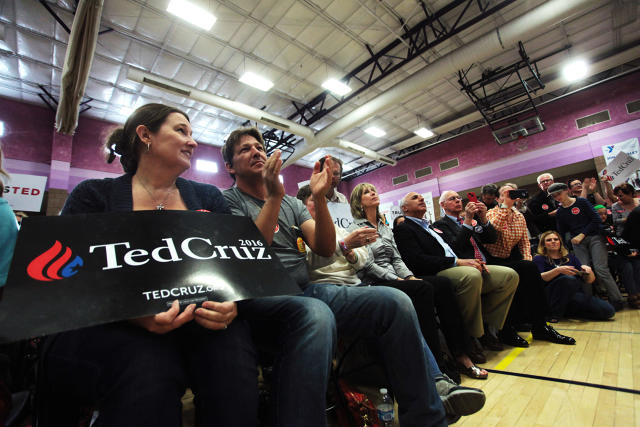
Indeed, listening to Cruz speak at rallies can sound a lot like listening to a sermon by a fire and brimstone evangelical preacher. But while that may work for a primary, Christie has doubts if such a leadership style would work in a general election campaign. “He can be inspiring to those who support him–it remains to be seen whether that can translate into broader support within the GOP as well as Independents who would be critical to a general election strategy that would lead to victory.”

If Trump’s leadership style is anger-based, Saltz says Cruz’s leadership style is based on another high-valence emotion: Fear. As opposed to anger, which seeks someone to blame, fear plays to our thoughts of the worst possible outcomes coming to pass. Evangelical faiths have severe otherworldly punishments for not following the rules set out by their religion. Cruz’s ideologically pure (from his faith’s point of view) preacher-like leadership style resonates with the religious far right.

“The idea of being an ideological purist is appealing to people who are voting for him,” says Saltz. “I can really understand why people are turning out for him; people who find being evangelical appealing, or faith-based appealing, or anti-science, which it is, appealing.” Yet like Christie, Saltz has doubts about how well Cruz’s preacher/evangelical leadership style will work in a general election. “Everybody can tap into being an ideological purist, but we’re not a pure country. We are these pockets of very different ideologies.”

Photo: Flickr userCory Doctorow

Bernie Sanders

When it comes to the Democratic primaries, Christie calls Sanders’s leadership style “refreshingly authentic.” You rarely ever think Sanders is saying something or acting in a certain way because a focus group told him it’s what people want to hear or see.

“Whether one believes the next president of the United States should break up big banks, go after Wall Street or provide universal health care coverage, there is no question that Senator Sanders says what he means and means what he says,” notes Christie. “Belief of authenticity in American political leaders today is anemic; Sanders leaves no doubt of what he would seek to accomplish were he elected president.”

And while he says Sanders is “truly without a peer in ability to inspire and motivate his core base,” Christie has doubts whether his far-left liberal leaning goals, even when combined with his authentic leadership style, could be enough to mobilize more centrist voters in a general election.

The belief that authenticity is virtually anemic in politics today resonates with people who have become psychologically desensitized to an electorate who expect lies to be the norm, says Saltz.

“Psychologically, what’s galvanizing people to Sanders, is the identification with unfairness,” says Saltz. “The concept of unfairness forms in early life. All kids feel at some point or another that things are unfair. To some degree, it’s a difficult developmental step to accept that things are unfair in life, and some people never really accept that. It resonates to some degree with a lot of people. Sanders’ leadership style and message taps into the fact that life was never a level playing field. A lot of his message is, ‘It has been unfair and my mission as a leader will be to make it much more fair.'”

Yet due partly to the neurological differences in people’s brains, while some people deal with this unfairness with anger, which Trump takes advantage of, Sanders is about being “revolutionary in the most positive sense possible,” Saltz says. “He’s not doing it in a fear-based way. His style appeals much more to people who look at things in gray tones. It’s more, ‘Let’s be uplifted and correct the fairness in a spirited way,’ and not because otherwise you’ll be smited and die, or raped, or whatever.”

Photo: Flickr userPhil Roeder

Hillary Clinton

And then we come to Hillary Clinton, the once-inevitable Democratic nominee who has seen her route to nomination stymied by the meteoric rise of Bernie Sanders. Christie calls Clinton’s leadership style “quixotic” and notes that as the former First Lady, Senator and Secretary of State, “Hillary Clinton should have entered this presidential contest as a demonstrable front runner” yet she’s become a candidate many find inauthentic. “I would posit that Clinton’s campaign rallies only reinforce the impression that she will say or do anything to become elected rather than articulate a concrete set of beliefs/skills she would bring to the Oval Office.”

Saltz says that from a leadership perspective, Clinton probably has a bigger challenge than the other candidates. Those that support her see a leader who comes across as not only strong, but one who has the leadership experience most suited to being president. “If you are a liberal-minded person, and you see things in gray, you’re thinking informationally,” says Saltz. “You’re going to be like, ‘What did she do as Secretary of State? How many pieces of this puzzle has she already done?'”

Yet Saltz concedes that she understands why even some liberals see Clinton as someone who is always trying to say the right thing to the right audience. “In my opinion, as a psychoanalyst, I think [Clinton’s leaderships style] is most suffering from maternal transference,” Saltz says. “Meaning, I think that as a woman she cannot say the same things that a man can say and have it feel, and come across, the same way. I think that when she says, for example, ‘Shame on you’, it conjures up images of how a mother would say ‘shame on you’ for some people in a way that feels very cringe-worthy.”

This leadership style issue is, of course, a gender double standard, but one Saltz says Clinton, though unfairly, always needs to take into account when presenting herself.

“I do think that probably it’s been hard, because probably people are advising Hillary all kinds of different things which don’t, frankly, allow for as much authenticity, because this is probably a struggle, this issue of being female,” she says.

For example, explains Saltz, if Clinton said, as Cruz did, “We will carpet-bomb [ISIS] into oblivion. I don’t know if sand can glow in the dark, but we’re going to find out” it wouldn’t come across well for her. The statement wouldn’t be seen as powerful, as it was seen for Cruz. Powerful, assertive statements “don’t resonate as well for women,” says Saltz.

“I’m not saying that’s right. It’s not right. I’m just saying it is. It just is. Women leaders have always suffered from this, and the higher that they get, and the bigger and more powerful that they are, to some degree the more this becomes an issue.”

And it’s a leadership style double standard that could hurt Clinton in the general election if it comes down to her and the increasingly presumptive GOP presidential nominee Trump.

“Trump can say one thing and then say another thing—a completely different thing—and people are not like, ‘Wow, he seems really inauthentic.’ Because of the psychological traits of his supporters, the vociferousness of this anger actually makes them feel that he’s really authentic, like he’s authentically angry,” says Saltz.

“If Clinton does exactly the same thing, in fact not even as big a turnaround, a much more subtle thing, liberals who are listening with a more gray zone brain are going to think, ‘That sounds a little different than before. Now I’m thinking that’s not so authentic.'”

Read More